To grow with the company
If the business grows its profit, its share price can rise over the years. There will be falls along the way.
Thousands of companies are listed on NSE and BSE. Learn what a share is, how buying one works and what to check before you invest.
A stock, or share, is a small piece of a company. Own one share, and you own a tiny part of that business and its future profits.
Listed shares trade every working day on NSE and BSE, and the price moves as people buy and sell. SEBI regulates the market, and your shares are held in your name in a demat account.
Each reason comes with a trade-off: prices can fall as well as rise.
If the business grows its profit, its share price can rise over the years. There will be falls along the way.
Some companies pay part of their profit to shareholders as dividends. Not all do, and payouts can change.
Shares can be sold Monday to Friday during market hours, so your money isn’t locked in.
Every trade on NSE and BSE follows the same five stages. Shares reach your demat the next working day.
Choose the stock, how many shares and your price.
NSE or BSE matches your order with someone selling.
It lists the price, quantity and every charge you paid.
India settles trades in one working day (T+1).
Keep them as long as you like, or sell to get cash back.
When you place an order, you choose how long you’ll keep the shares. Most people starting out buy for delivery.
Not ready to pick individual companies? These are other ways to invest in the stock market, each with its own risks and costs.
Buy shares when a company first lists on the exchange. You apply over a few days, and if demand is high, shares are allotted by lottery.
What is an IPO?A basket of shares, gold or bonds that trades on the exchange like a single stock. One purchase spreads your money across the whole basket.
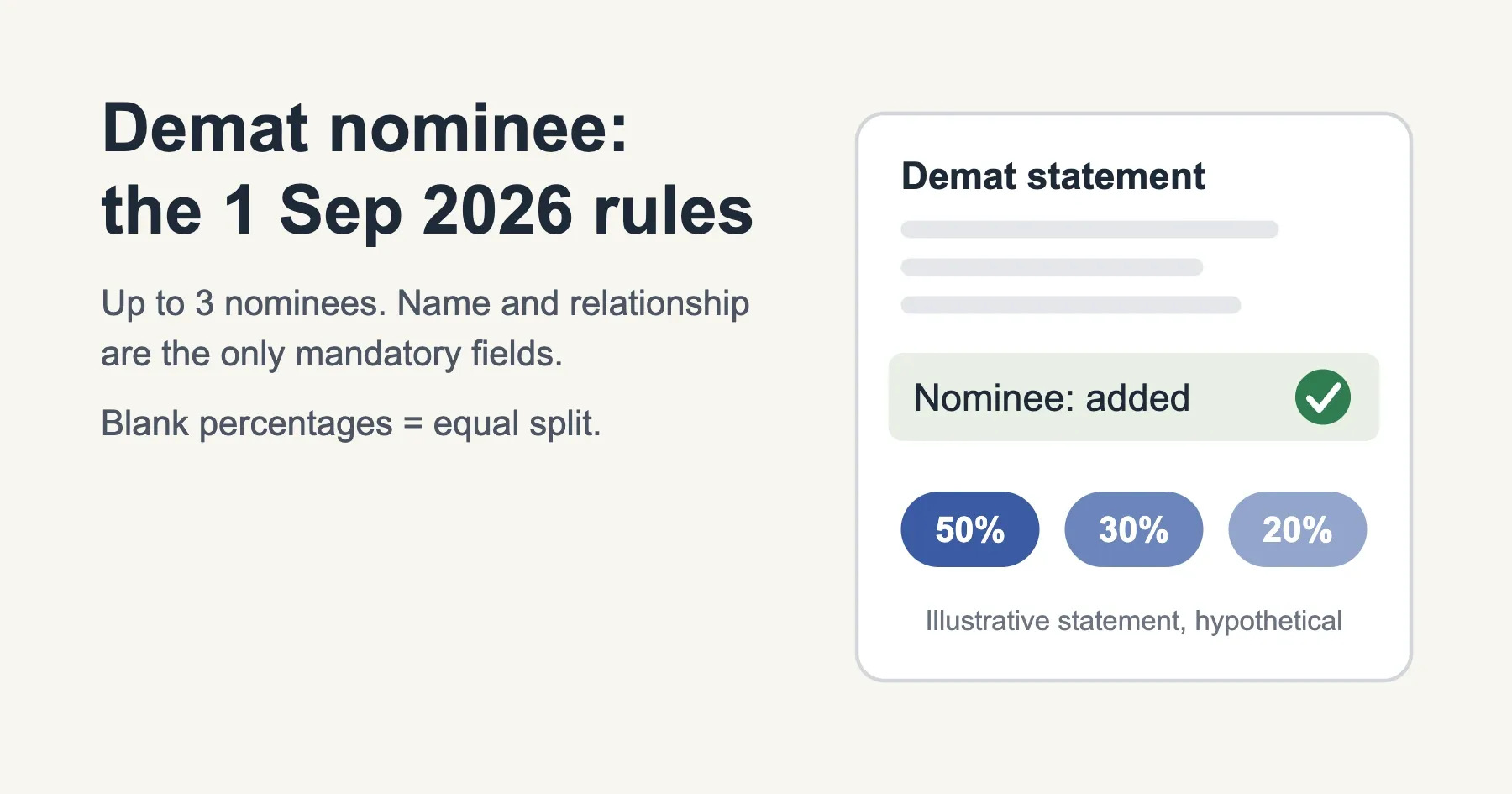
Explore ETFsAdd a demat nominee online in minutes: up to 3 nominees, only name and relationship mandatory, equal split if blank. SEBI rules from 1 September 2026.
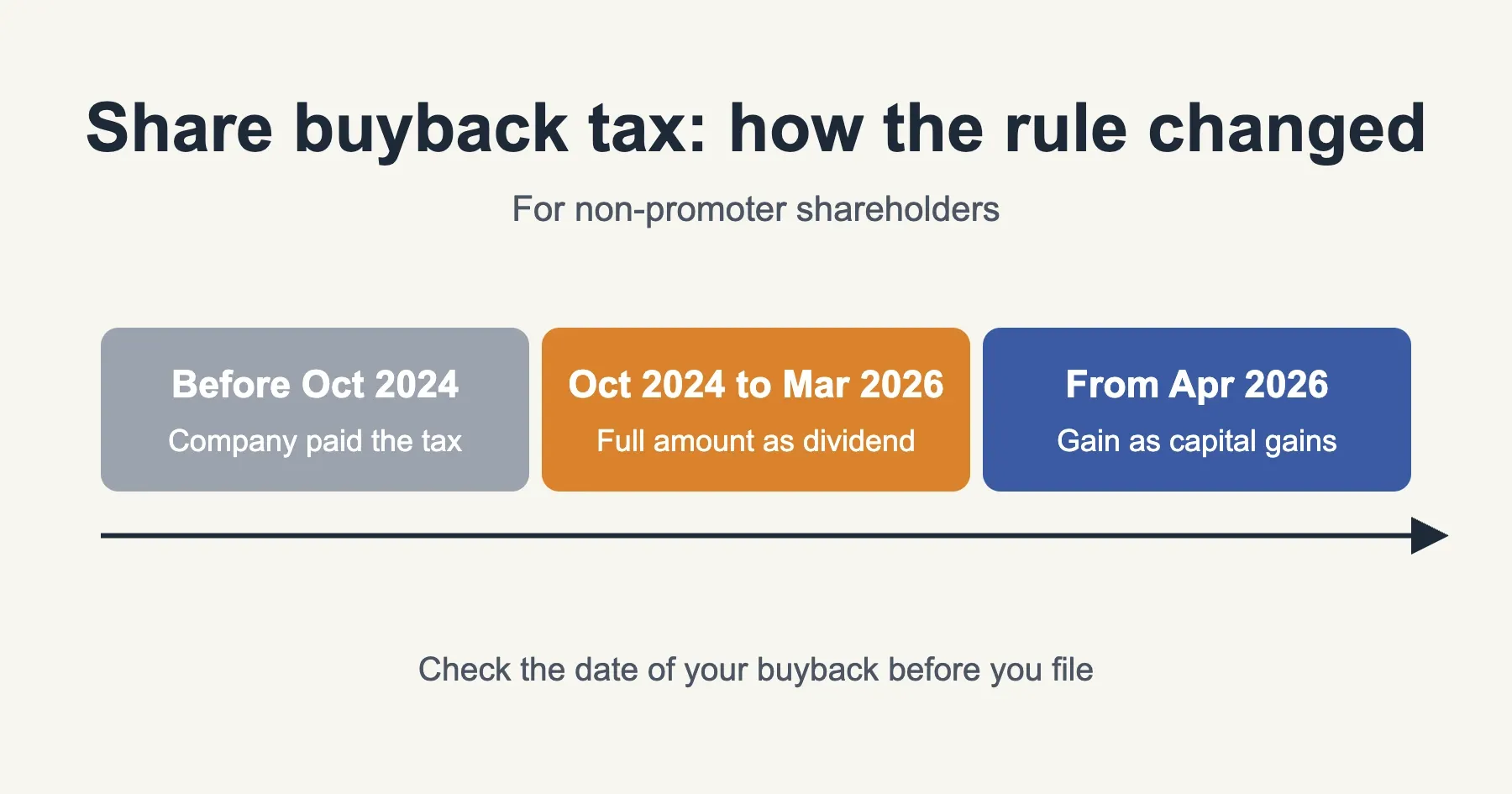
Read more →From 1 April 2026, buyback proceeds are taxed as capital gains, not dividend. The three-regime timeline, with one ₹ example run through each.
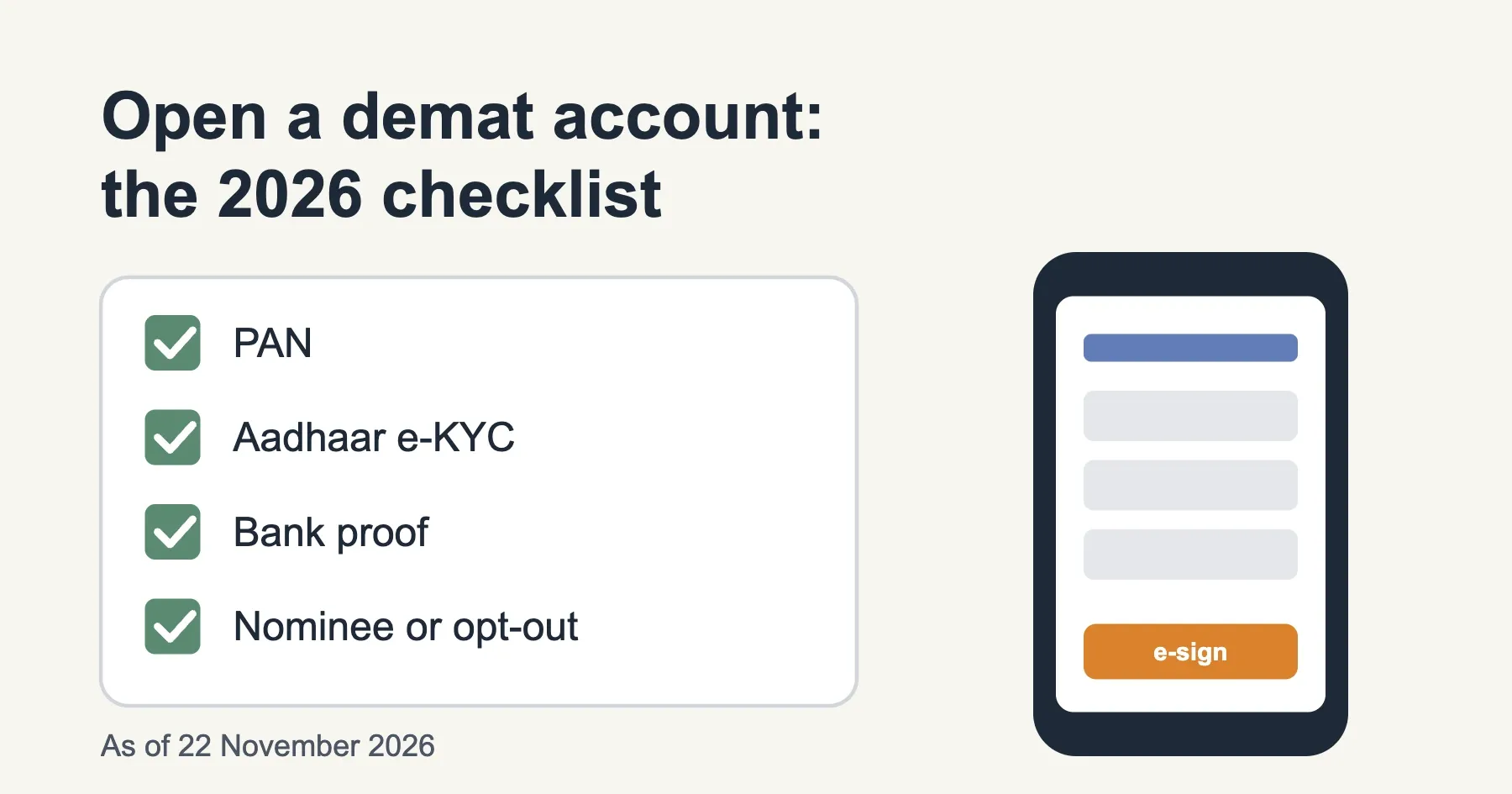
Read more →How to open a demat account in 2026: documents, steps, BSDA charges and the new nominee or opt-out rule. No minimum balance.
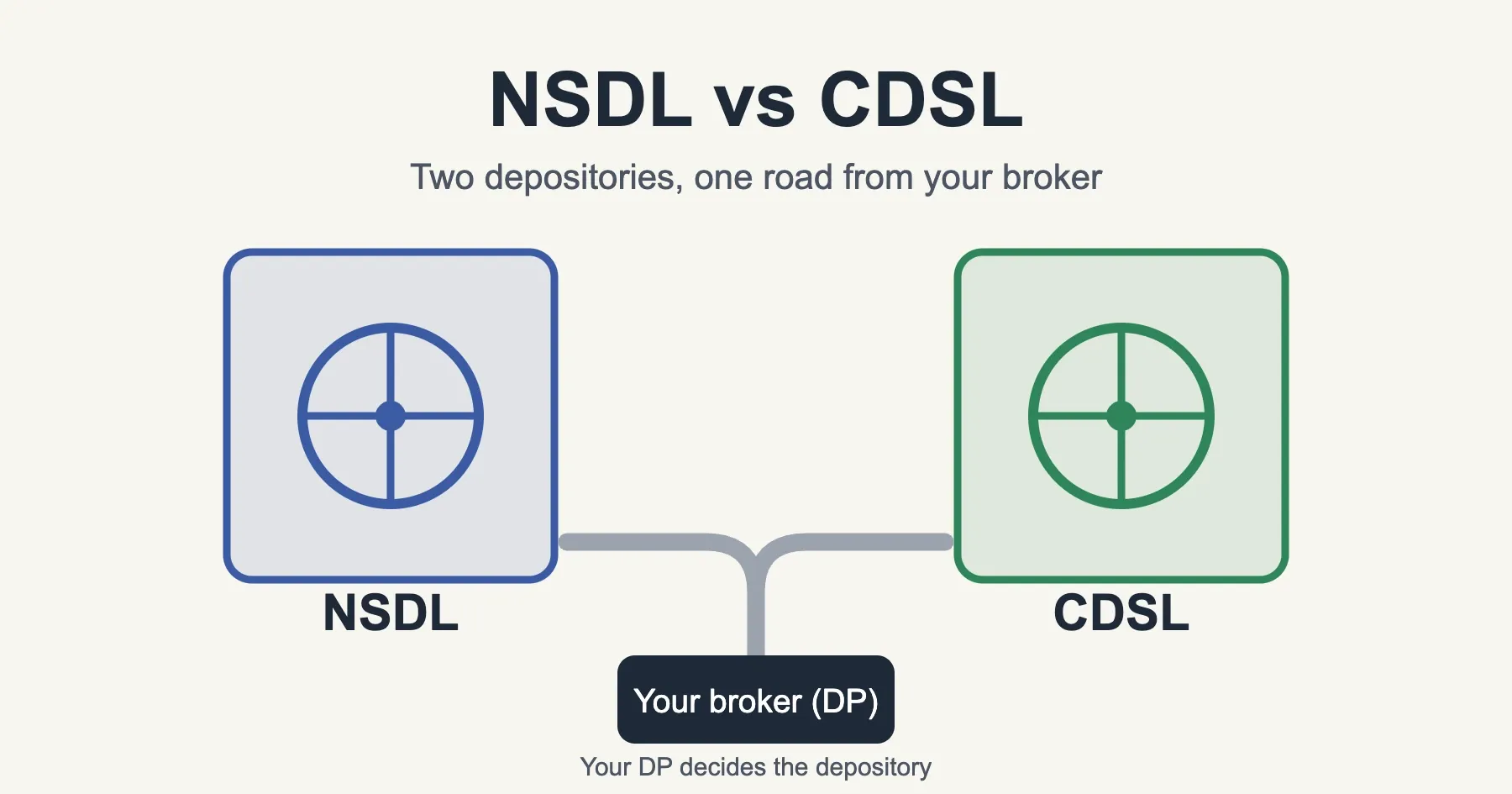
Read more →NSDL vs CDSL explained: both SEBI-regulated depositories, your DP picks one. Tell them apart by account ID and CAS, with dated facts.
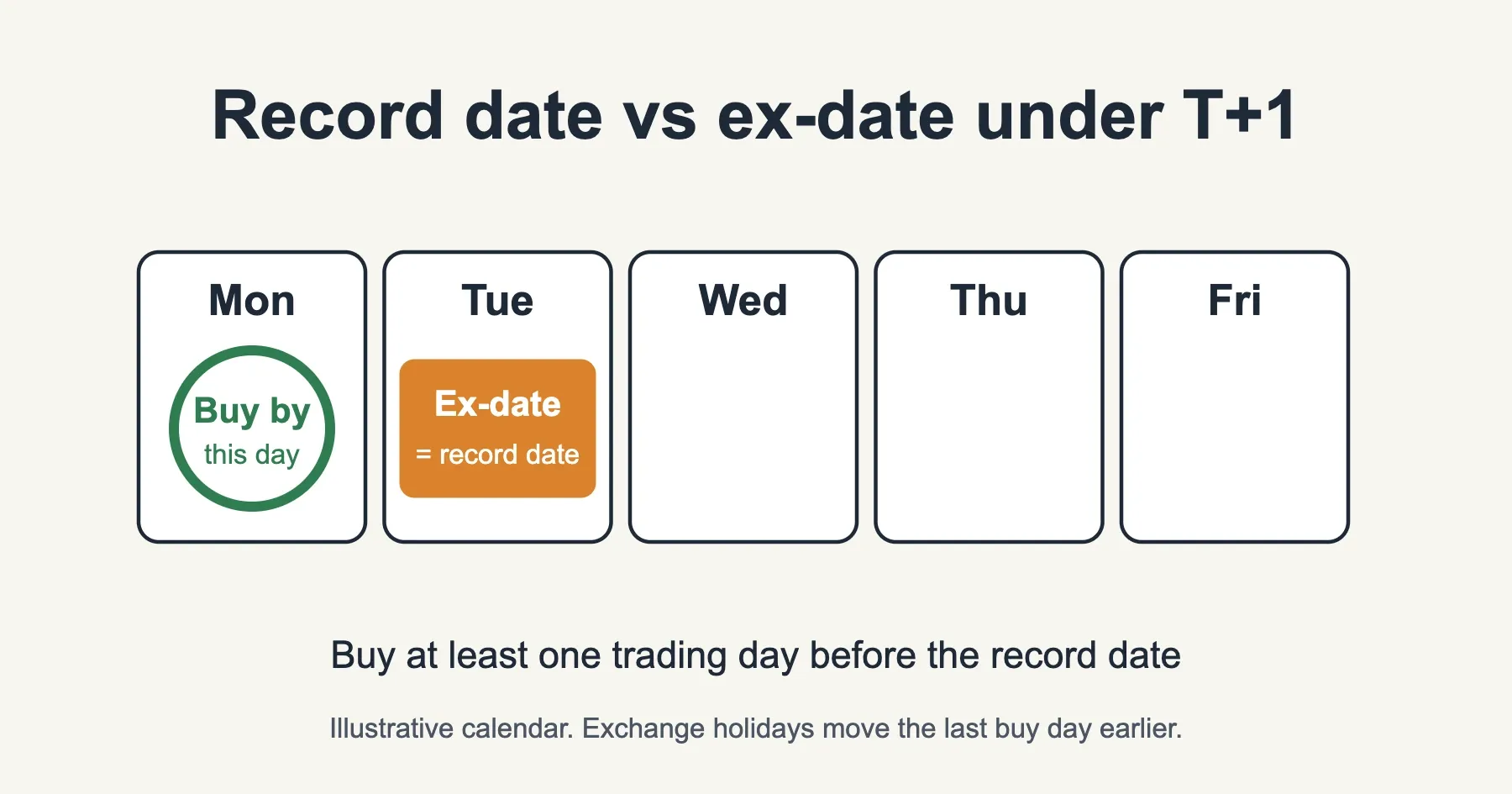
Read more →Record date vs ex-date under T+1: buy one trading day before the record date to get the dividend. Calendar example, price drop and tax.
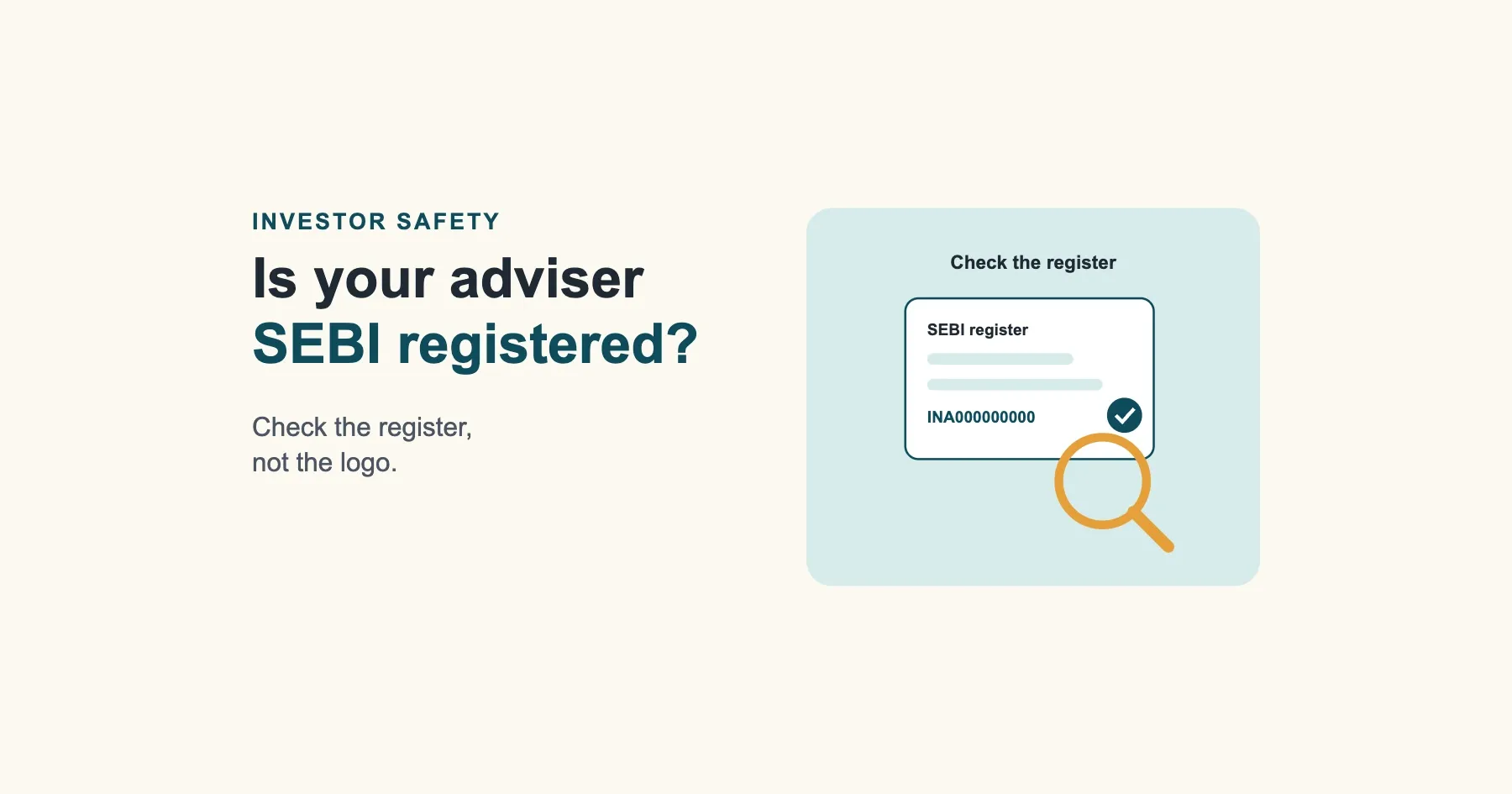
Read more →Check an adviser, analyst or finfluencer on SEBI's register and a distributor's ARN on AMFI, see what each may do, and where to complain.
Read more →Just the price of one share, plus charges. There's no minimum number of shares, so if a share costs ₹180, you need ₹180 plus your broker's brokerage and the statutory charges. Stocks are coming soon to Laabh!
Your broker’s brokerage, plus the statutory charges every broker passes on: STT, the exchange transaction charge, the SEBI turnover fee, stamp duty and GST. Selling delivery shares also carries a depository (DP) charge. Your contract note lists every charge for each trade.
A demat account holds your shares electronically, in your name, at a depository (CDSL or NSDL). You need one to buy shares for delivery, along with a trading account to place orders and a bank account to pay.
Your trade settles one working day after you place it. Shares you buy on Monday are in your demat account on Tuesday, and money from a Monday sale reaches your trading account on Tuesday, ready to withdraw. Weekends and trading holidays do not count, so a Friday trade settles on Monday.
Delivery means you keep the shares: they settle into your demat account and you can hold them as long as you like. Intraday means you square off the same day and never take delivery. Intraday needs less money up front and pays STT on one side rather than two, but it carries far more risk, because the position closes whether or not the price has done what you expected.
Margin trading (MTF) lets you take a bigger delivery position than your cash allows: your broker funds the rest and keeps the shares as collateral. You pay interest on the borrowed amount, usually charged daily, at a rate your broker sets. If the price moves against you, you'll need to add margin or the position gets squared off. It magnifies losses just as much as gains.
Many brokers offer a Stock SIP: it buys the same share on a schedule you choose, by amount or by number of shares. Each instalment is a normal buy order with normal charges, and there's no lock-in, so you can stop it whenever you like.
Your delivery shares sit in your own demat account at the depository (CDSL or NSDL), in your name, not on your broker's books. SEBI also requires brokers to keep client money separate from their own. So if a broker shuts down, shares already in your name stay yours. Signing a DDPI is optional; without it, you approve each sale yourself with a TPIN.
Held 12 months or less, a gain is short term and taxed at 20%. Held longer, it is long term and taxed at 12.5%, with the first ₹1.25 lakh of long-term gains in a financial year exempt. Dividends are added to your income and taxed at your slab. Rates are stated as of 28 September 2026 and change at almost every Budget, so confirm the position for your filing year with a tax adviser - Laabh does not give tax advice.
Equity mutual funds and index funds let a fund manager or an index choose the companies for you. ETFs are baskets that trade like a single share. IPOs let you apply for shares when a company first lists. Each has its own risks and costs.
Browse NSE and BSE companies by sector, size and key ratios. Reading a company page is free.
Data: Rules described are as of 28 September 2026. Statutory rates are set by SEBI, the exchanges and the central and state governments and can change without notice. All app screens on this page are illustrations of the product. The stock page shown carries a real listed company, Reliance Industries, with sample figures that are not live market data. Nothing on this page is a recommendation to buy or sell any security. The depository and the exact margin trading rate shown are placeholders on this build.
Investments in the securities market are subject to market risks. Read all the related documents carefully before investing. Past performance does not indicate or guarantee future returns. This page is for information only and is not investment advice. Nothing here accounts for your personal circumstances, and Laabh does not provide tax advice.
Laabh is a brand of Kautilya Capital Technologies Private Limited (CIN U62099KA2026PTC224259). Investing through Laabh is not available yet; registration details for broking and mutual fund distribution will be shown here when it opens.