How IPO allotment works for retail investors when applicants outnumber shares
Retail IPO allotment explained: the 35% retail quota, why oversubscribed issues use a draw of lots, and when blocked UPI money is released.
Summarize this article with AI





The short version
- Retail allotment is rule-based: the ICDR Regulations reserve not less than 35% of a book-built net offer for retail individual investors, as stated in each offer document.
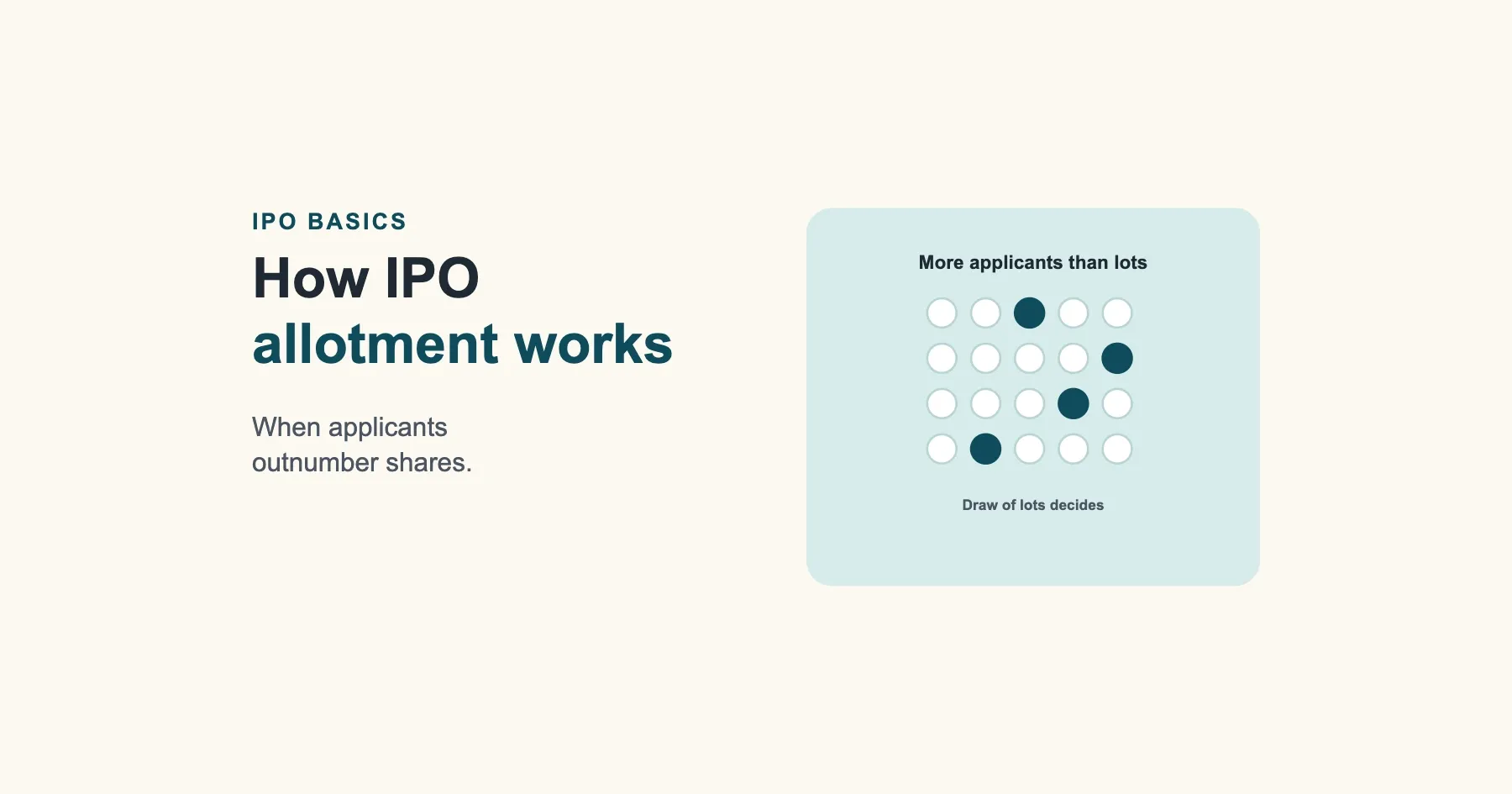
- When the retail portion is short of lots, each allottee gets at least the minimum bid lot, so applicants are selected for that lot, usually by a draw of lots.
- In that situation, a bigger bid within the ₹2 lakh limit blocks more money but does not usually add chances.
- Your money is blocked, not debited, and is released by T+2 if nothing is allotted; listing follows on T+3.
- Allotment is not a gain: shares can list and trade below the issue price.
Risk note: IPO shares are equity. Applying does not mean you will get shares, and shares you do get can list and trade below the issue price. This guide explains the process for education only and is not a recommendation to apply for, buy or sell any IPO.
Short answer: in an Indian IPO, retail applicants bid inside the retail portion of the issue. If that portion is oversubscribed, SEBI's ICDR Regulations require each allotted retail investor to get at least the minimum bid lot, subject to availability, so the registrar usually picks applicants for that lot through a draw of lots. Your money is only blocked through ASBA/UPI, and it is released if you get nothing.
Take a hypothetical applicant, Meera, 27, in Mysuru. She applies for one lot through her bank's UPI app and approves the mandate. Two working days after the issue closes, she has no shares and the block on her money has been lifted. Nothing went wrong: the retail portion had far more applicants than lots. This guide follows one application from bid to credit or unblock, and shows where chance enters.
How does IPO allotment work for retail investors in India?
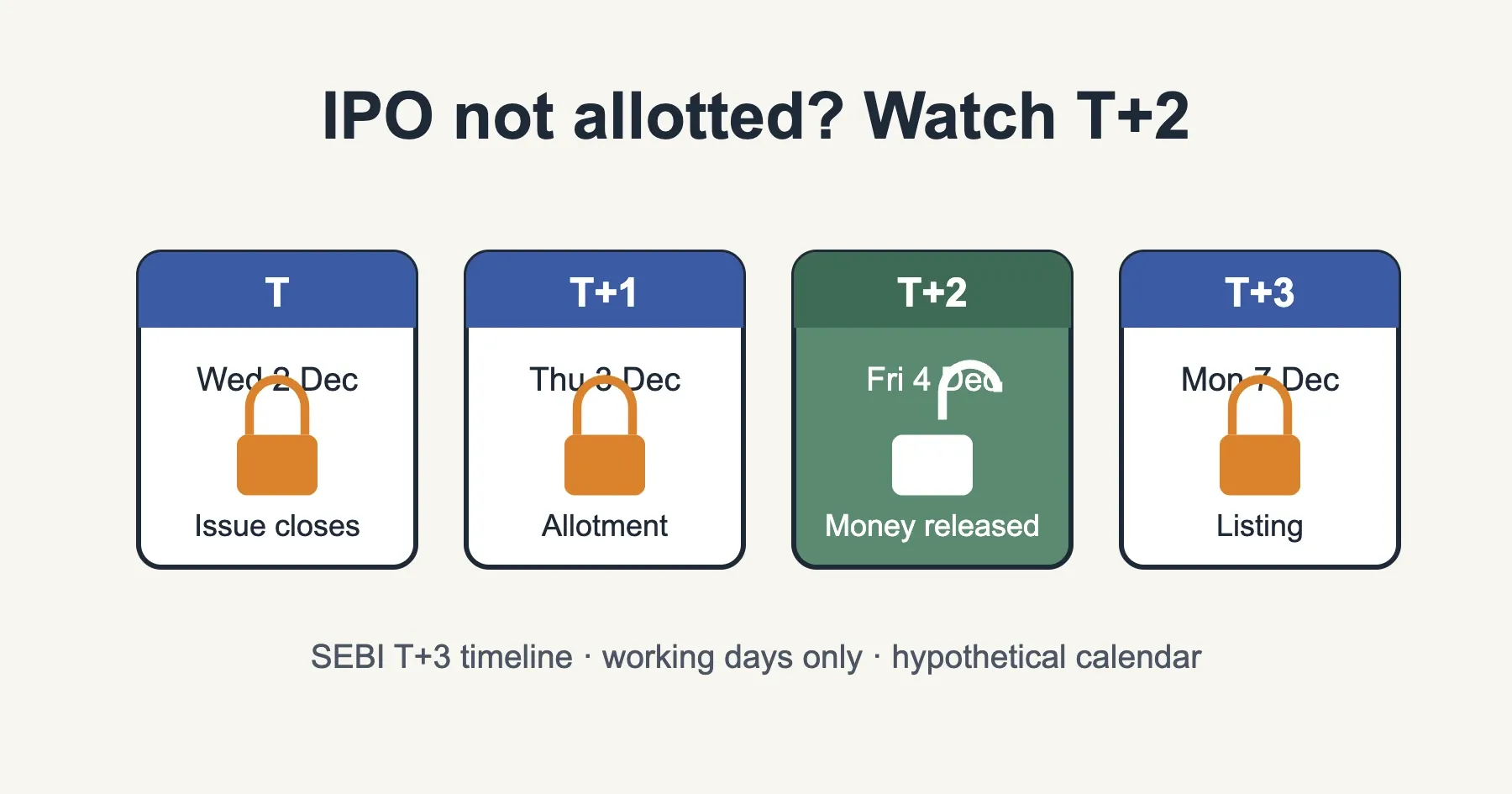
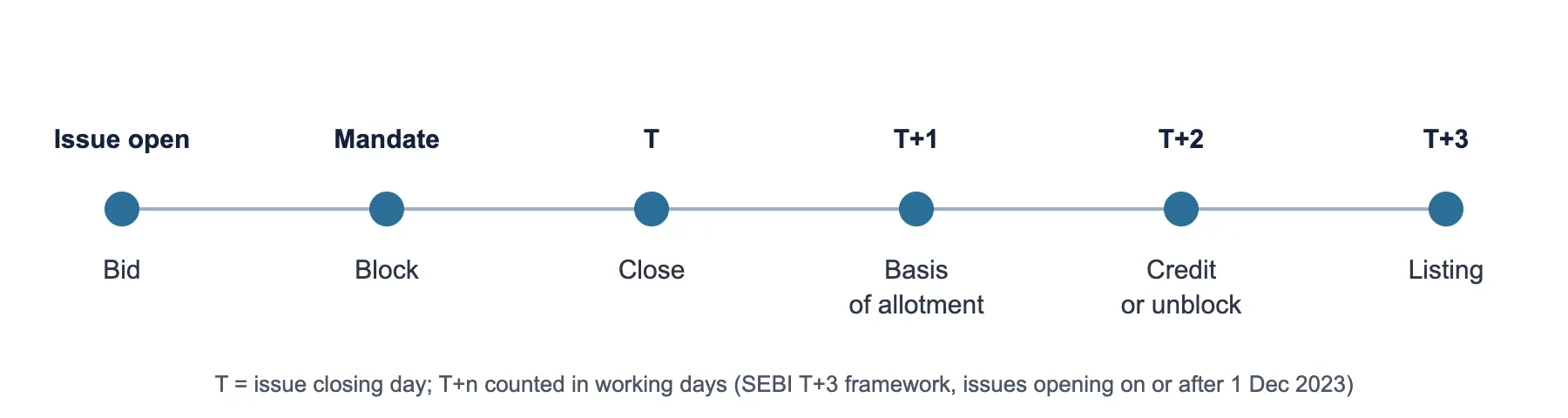
Every public issue moves through the same sequence. SEBI's T+3 framework, mandatory for public issues opening on or after 1 December 2023, sets the clock, where T is the day the issue closes for bidding.
| Step | When | What happens |
|---|---|---|
| Bid | Issue open | You choose a quantity in multiples of the lot and approve a UPI mandate (or apply via ASBA at your bank) |
| Block | On mandate approval | The bid amount is blocked in your bank account, not debited |
| Close | T | Bidding ends |
| Basis of allotment | T+1 | The registrar finalises rejections and the basis of allotment; the stock exchange approves it |
| Credit or unblock | T+2 | Allotted shares are credited to your demat account; for the rest, banks unblock the money |
| Listing | T+3 | The shares start trading on the exchange |
Unblocking is due by 4 pm and share credit by 6 pm on T+2. The days are working days. For the UPI side of this, see how to apply for an IPO through UPI.
What is the retail category quota in an IPO?
The net offer is split into investor categories: retail individual investors (RIIs), non-institutional investors and qualified institutional buyers.
For a book-built issue, Regulation 32(1)(a) of the SEBI (Issue of Capital and Disclosure Requirements) Regulations, 2018 sets aside not less than 35% of the net offer for retail individual investors. That applies to issuers that meet the standard eligibility route; the split for any particular issue is stated in its offer document (the red herring prospectus), so read that rather than assuming 35%.
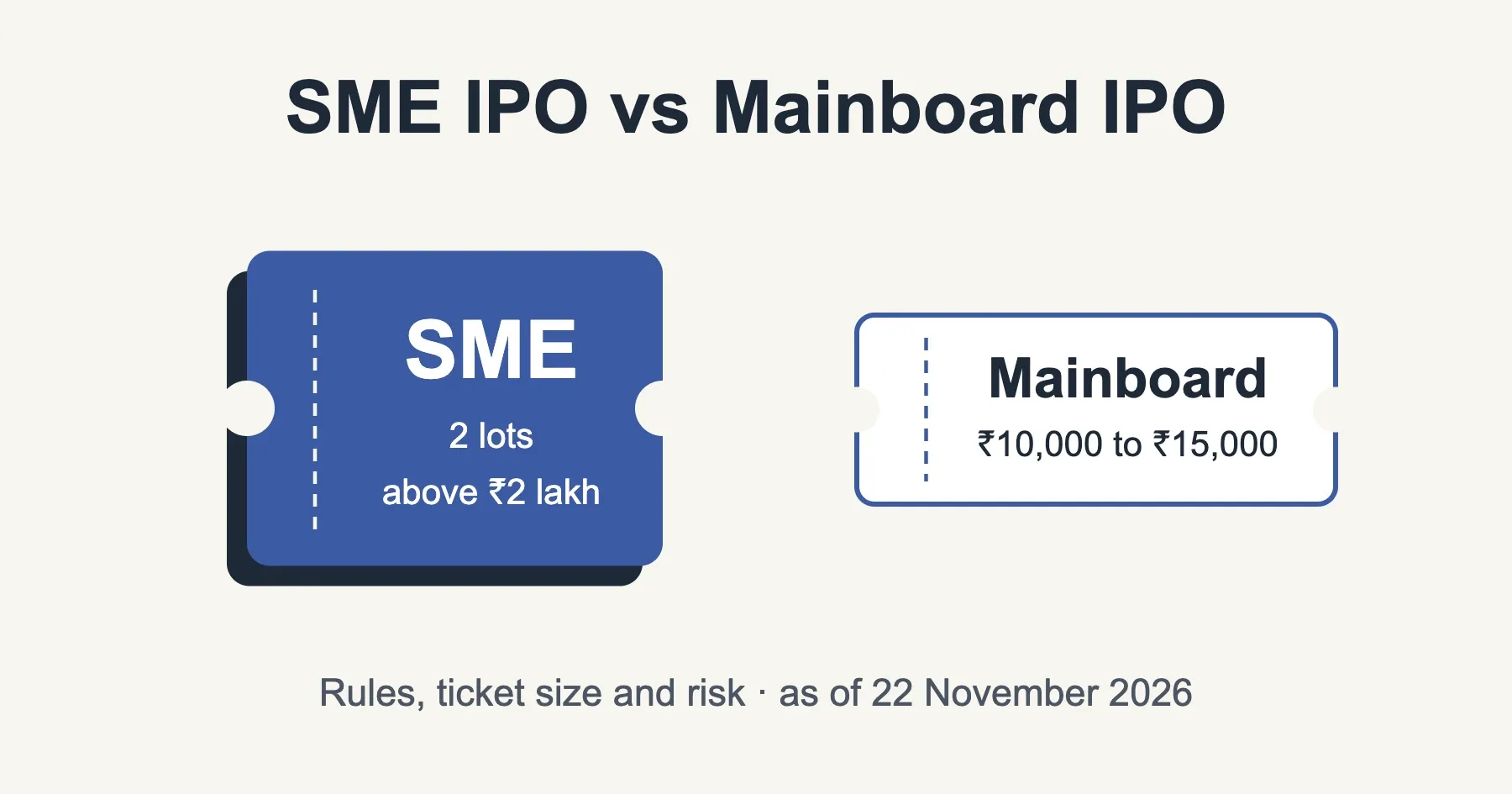
A retail individual investor is an individual who bids for up to ₹2 lakh in an issue. Bid above that and you move into the non-institutional category, where allotment rules differ. This guide covers mainboard IPOs; SME IPOs follow separate rules and lot sizes.
What is a lot size?
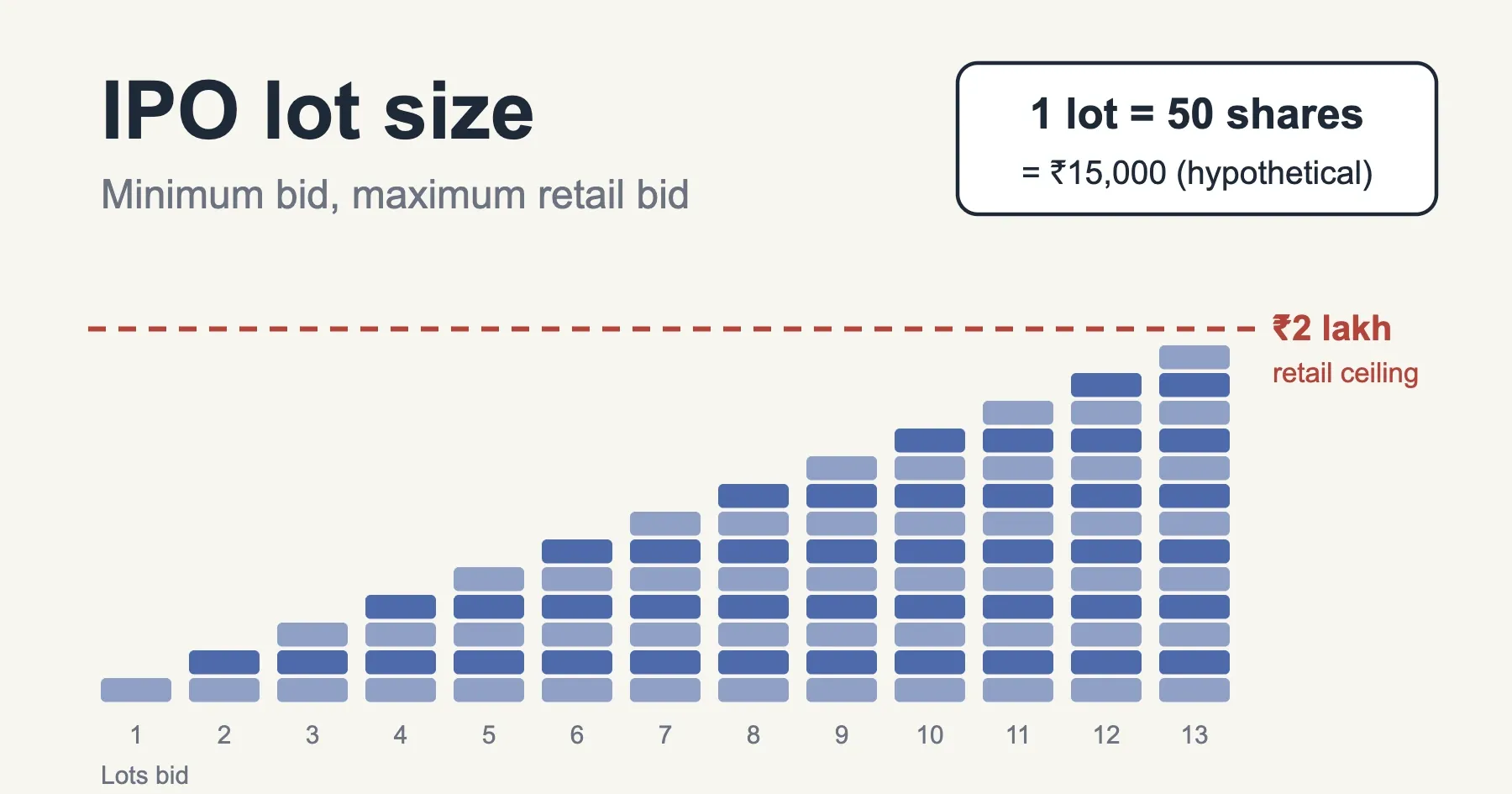
The lot (or minimum bid lot) is the smallest quantity you can bid for, and you bid in multiples of it. The issuer sets it, and it varies from issue to issue. In the hypothetical example below, one lot costs ₹15,000.
What happens when the retail portion is oversubscribed?
Two different situations follow, and the ICDR wording covers both.
Enough lots for everyone. If the retail portion has at least one minimum lot for every valid retail applicant, everyone gets one lot. Under the ICDR allotment procedure, the remaining shares, if any, are then allotted on a proportionate basis, which is where bidding for more lots can matter.
Not enough lots for everyone. The rule is that each retail allottee gets not less than the minimum bid lot, subject to availability of shares in the retail category. When there are fewer lots than applicants, not everyone can get one, so the registrar selects which applicants receive the minimum lot, typically through a draw of lots. Shares are not shaved into fractions of a lot across everyone.
The registrar runs this and the stock exchange approves the basis of allotment.
Worked example: one ₹15,000 lot in a crowded retail portion
All figures in this section are hypothetical; no allotment or listing gain is assured.
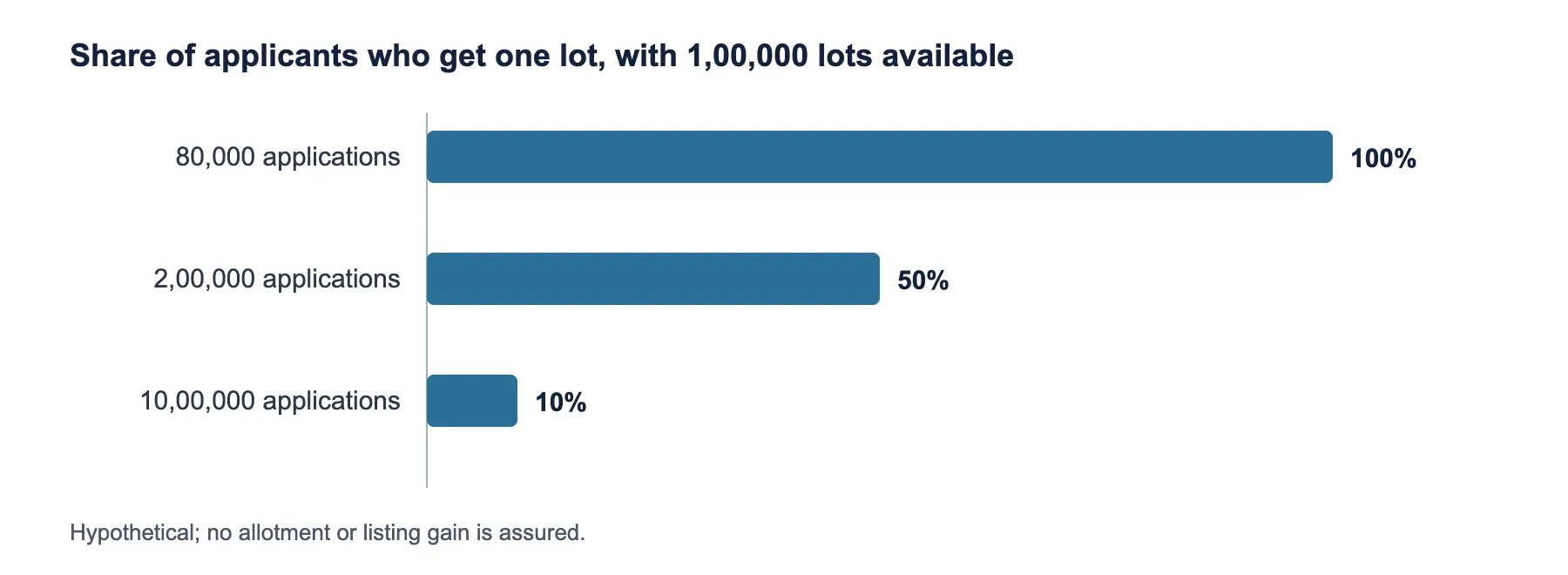
Suppose an IPO's retail portion contains 1,00,000 minimum lots (1 lakh lots of ₹15,000 each, about ₹150 crore of shares) and receives 10,00,000 valid retail applications (10 lakh).
- Lots available ÷ applications = 1,00,000 ÷ 10,00,000 = 1 in 10.
- So roughly 10% of valid retail applicants get one lot through the draw; about 90% get nothing.
| Valid retail applications (hypothetical) | Minimum lots available | Share of applicants who get one lot | Lots left for proportionate allotment |
|---|---|---|---|
| 80,000 | 1,00,000 | 100% | 20,000 |
| 2,00,000 | 1,00,000 | 50% | 0 |
| 10,00,000 | 1,00,000 | 10% | 0 |
Does applying for more lots increase my chance of allotment in an oversubscribed IPO?
Generally, no. When the retail portion is short of lots, the selection is made per application for the minimum lot, so a larger retail bid does not add more chances in that draw.
In the example, Meera could bid up to 13 lots (₹1,95,000) and stay within the ₹2 lakh retail limit. That blocks ₹1,95,000 instead of ₹15,000, but in the 1-in-10 scenario she is still one applicant in the draw for one lot. If she is selected, she gets one lot and ₹1,80,000 is unblocked.
Bigger bids matter only in the first situation above, when every applicant gets a lot and shares are left over for proportionate allotment. The offer document and the published basis of allotment show which case applied for a given issue.
Why didn't I get an IPO allotment even though I applied?
The common reasons, in rough order:
- The draw. The retail portion was oversubscribed and your application was not selected for the minimum lot. This is the usual reason, and nothing about the application was wrong.
- The mandate was not approved in time. A UPI mandate that is not accepted before the cut-off leaves no blocked amount behind the bid.
- Bid below the final price. If you bid at a specific price instead of the cut-off price and the issue priced higher, the bid may not be valid at the final price.
- Technical rejection. A mismatch in PAN, demat details or bank account, or duplicate applications under the same PAN, can make an application invalid.
Once the basis is final, check status on the registrar's website with your PAN or application number.
What happens to the blocked UPI/ASBA money if I don't get allotment?
ASBA stands for Application Supported by Blocked Amount. Your money stays in your bank account, blocked against the bid.
If you get no shares, the bank releases the block; under the T+3 framework this is due by T+2. If you get fewer shares than you bid for, only the amount for allotted shares is transferred and the rest is unblocked. If a block has not lifted after the timeline, raise it first with your bank, then with the registrar.
Allotment is not a return
Getting shares only means you bought them at the issue price. From listing day, trading sets the price, and it can open or move below the issue price. The draw decides who gets shares, not what they will be worth.
Frequently asked questions
Who decides the basis of allotment?
The registrar to the issue finalises the basis of allotment after rejecting invalid bids, and the designated stock exchange approves it, on T+1 under the T+3 framework. The finalised basis is published, so you can see how each category was allotted.
Is my money debited when I apply for an IPO?
No. Under ASBA, including UPI applications, the amount is blocked in your bank account. Money moves only for shares actually allotted; the rest is unblocked.
What is a lot size in an IPO?
It is the minimum number of shares you can bid for, set by the issuer and stated in the offer document. You bid in multiples of it, and it varies by issue.
Can I apply more than once in the same IPO to improve my chances?
Multiple applications under the same PAN are generally treated as duplicates and can be rejected. Plan on one valid application per PAN, and check the offer document for the exact rule.
Read next
Shares from an IPO land in a demat account, and so do stocks bought any other way; see what a demat account is. To compare investing in individual stocks with investing through a fund, read stock SIP vs mutual fund SIP.
— Laabh