IPO GMP meaning: what the grey market premium is, why it's unofficial, and what to check instead
GMP is an unofficial, unregulated quote from off-exchange IPO deals. Learn what it means, why it can be wrong, and which official data to check instead.
Summarize this article with AI





The short version
- GMP is an informal quote for an IPO's shares in off-exchange deals before listing; SEBI, NSE and BSE don't publish it.
- Nobody audits it: no order book, trade record or published volume sits behind the number.
- Grey market deals happen outside the exchanges, so no clearing corporation or exchange process protects either side.
- GMP doesn't decide allotment or the listing price, and shares can list below the issue price.
- Check the RHP, NSE and BSE subscription data, and the registrar's allotment status instead.
Risk note: IPO investing carries market risk. Listing gains are not guaranteed, and shares can list below the issue price. GMP is an unofficial, unregulated number. Nothing on this page is a recommendation to apply for, avoid, buy or sell any issue.
Grey market premium (GMP) is an informal figure for the price at which an IPO's shares are said to be changing hands off-exchange before they list. As of 19 November 2026, it is not published by SEBI, NSE or BSE, nobody audits it, and it can move quickly. It does not set your listing price, and it has no say in whether you get shares.
Nikhil, 25, in Mangaluru, has received a forward about an upcoming IPO: a GMP figure, rocket emojis and "apply fast". Before he blocks money in his bank account, he wants to know what that number is. This guide explains IPO grey market premium (GMP) meaning, the jargon around it, why the figure can be wrong, and where the official facts about an issue are published.
What GMP, kostak and subject-to-sauda mean
None of these terms is defined in SEBI's rules. They are market slang for private deals, and their usage can vary.
- GMP (grey market premium): the gap between an informal quote for an IPO's shares and the issue price. If the quote is above the issue price, people call the gap a premium; if below, a discount.
- Kostak: a quoted amount for a whole application rather than per share, commonly described as payable to the applicant whether or not the application gets an allotment.
- Subject-to-sauda: a quoted amount for an application that is commonly described as payable only if the application is allotted shares.
All three are informal arrangements between private parties. Because they happen outside the stock exchanges, none of the exchange's safeguards apply: there is no clearing corporation settling the deal and no exchange record of it.
Where GMP numbers come from, and why nobody can audit them
A listed share has an order book, a traded price and a published volume. A grey market quote has none of these. It is relayed from dealers through websites, chat groups and social posts, and each relay can round, inflate or copy the last number.
So you can't see how many deals, if any, happened at the quoted figure, who is quoting it, or when it was last updated.
SEBI has referred to grey market trends. In its consultation paper of 13 November 2025 on amendments to the SEBI (ICDR) Regulations, 2018, SEBI noted that many retail investors rely on secondary, unregulated sources, such as grey market trends and unverified social media, when they evaluate an IPO.
Is grey market dealing legal? What SEBI has said
As of 19 November 2026, we did not find a SEBI circular or investor awareness message that defines GMP or rules on grey market deals directly. What is on the record:
- SEBI's own description: the 13 November 2025 consultation paper counts grey market trends among unregulated sources of information.
- A reported proposal: in January 2025, news reports said SEBI was considering a regulated "when-listed" platform, where investors could trade IPO allotments between allotment and listing. We have not seen a SEBI document confirming such a platform is live, so treat it as reported, not in force.
The practical point holds either way. A grey market deal sits outside the regulated market, so if the other side doesn't pay, there is no exchange process to turn to.
Why GMP can be wrong
- Sentiment: the quote reflects the mood of a small circle of dealers and can swing with the wider market from one day to the next.
- Thin dealing: a handful of deals, or none, can sit behind a figure that is repeated widely.
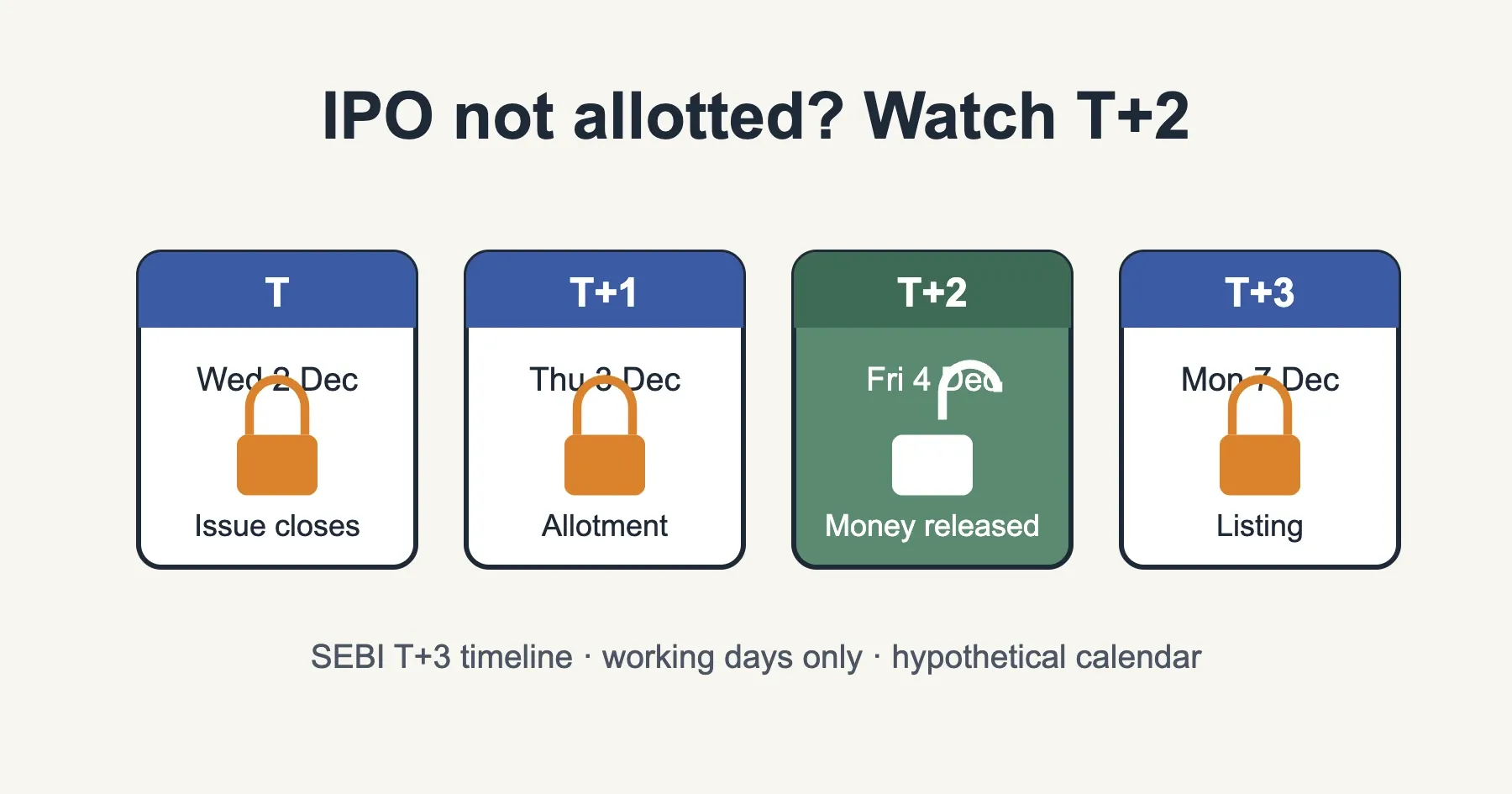
- Timing: for issues opening on or after 1 December 2023, SEBI made listing on T+3 mandatory, where T is the day the issue closes. Markets can move a lot between the last quote and the listing day.
- Incentives: whoever quotes the number may hold a position or benefit from more applications. You can't tell.
- No correction: nobody is accountable when a GMP turns out wrong.
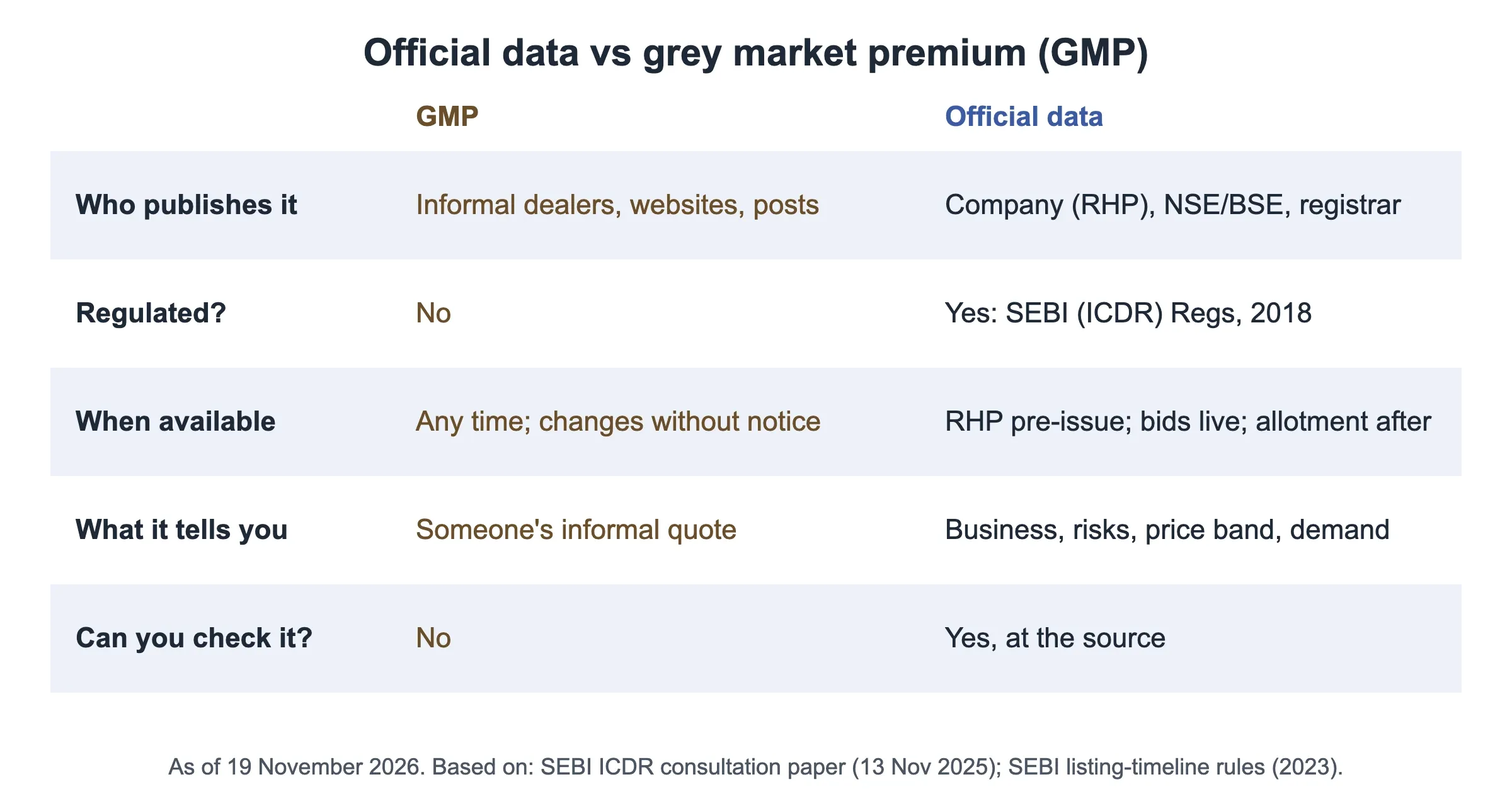
Official data vs GMP
| Grey market premium (GMP) | Official data | |
|---|---|---|
| Who publishes it | Informal dealers, websites, social posts | The company (RHP), NSE and BSE (bids), the registrar (allotment) |
| Regulated? | No | Yes, under the SEBI (ICDR) Regulations, 2018 and exchange rules |
| When available | Any time; changes without notice | RHP before the issue opens; bid data while it is open; allotment after it closes |
| What it tells you | Someone's informal quote | Business, risks, use of money raised, price band, lot size, demand by category, whether you got shares |
| Can you check it? | No | Yes, at the source |
What to check instead
- The red herring prospectus (RHP). Read the risk factors, the objects of the issue (what the money is for), the financial statements, the price band and the lot size. It is filed with SEBI and the exchanges.
- Subscription data on NSE and BSE. During the bid window, the exchanges show how many times each investor category has bid for the shares on offer. High demand is a fact about demand, not about value or the listing price.
- Allotment status. After the issue closes, check whether you were allotted shares on the registrar's website or the exchange's application-status page. Our hub on how IPO allotment works explains how shares are shared out when applicants outnumber them.
- Your bank's UPI mandate. See when your money is blocked, debited or released in applying for an IPO through UPI.
A worked example: one hypothetical ₹14,800 application
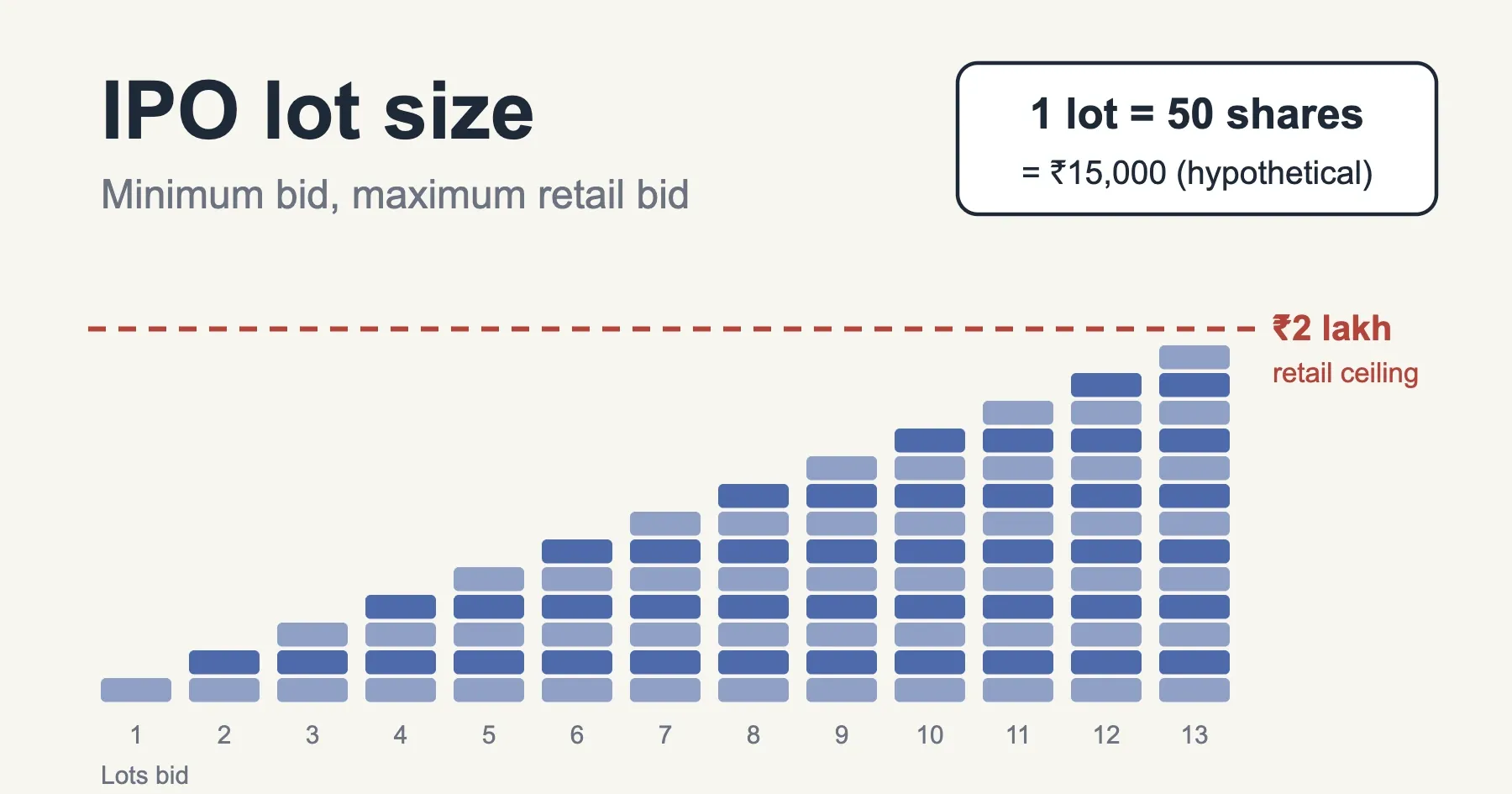
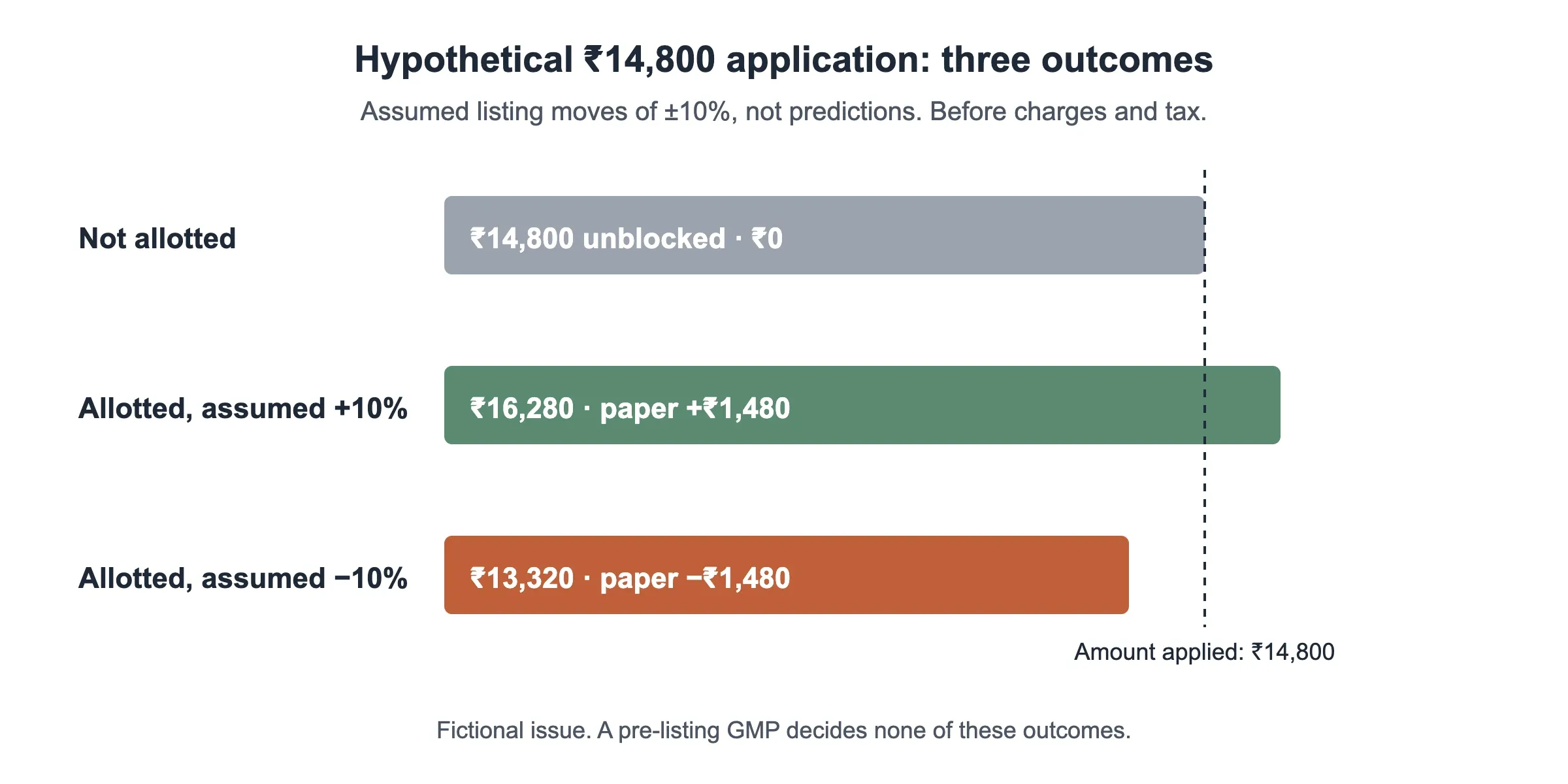
Take a fictional company with a hypothetical price band topping out at ₹148 and a lot of 100 shares. One lot means ₹14,800 is blocked through UPI. The listing moves below are assumed illustrative moves of 10% either way, not predictions, and the figures ignore charges and tax.
| Hypothetical outcome | Value of the lot | Gain or loss on paper |
|---|---|---|
| Not allotted | ₹14,800 unblocked | ₹0 |
| Allotted; assumed listing 10% above issue price | ₹16,280 | +₹1,480 |
| Allotted; assumed listing 10% below issue price | ₹13,320 | −₹1,480 |
A GMP quoted before listing decides none of these rows. Whether Nikhil lands in row one depends on allotment; which of the other rows happens depends on the market on listing day.
Allotment odds and listing-day tax
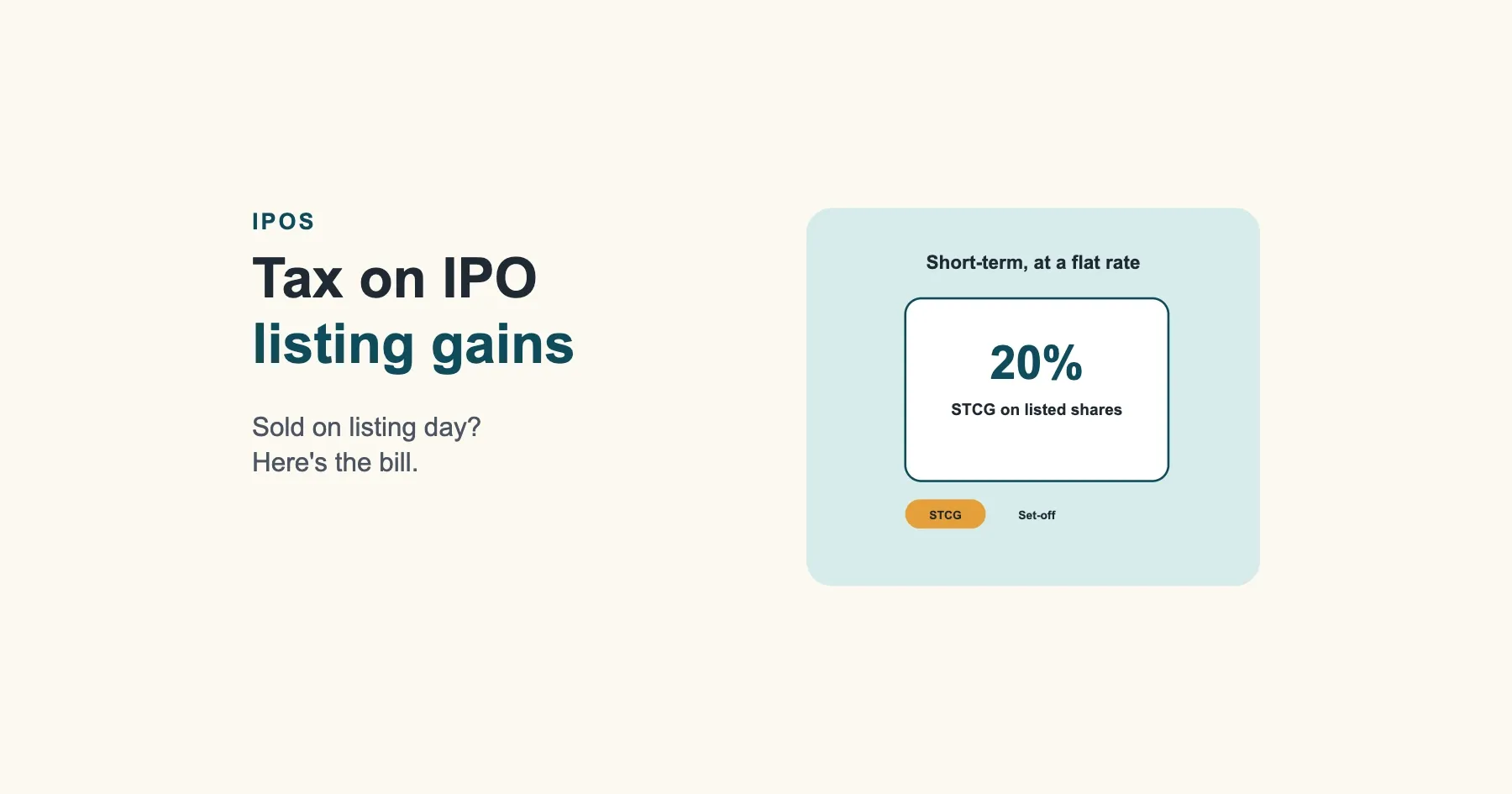
Two things shape the outcome more directly than any GMP. First, allotment: when the retail portion is oversubscribed, many applicants get no shares, as our hub explains. Second, tax: as of 19 November 2026, FY 2026-27, a profit on shares sold on listing day is generally treated as short-term capital gains, because they were held for less than 12 months. Tax rules change; consult a tax professional for your situation.
GMP "tips" and unregistered advice
A message that says "apply, the GMP is strong" is a recommendation dressed up as data. SEBI's investor awareness messages ask investors to "seek Investment advice from SEBI registered Investment Advisor". Before acting on any tip, check the sender's registration using how to check if an adviser is SEBI registered. Be wary of anyone who offers to secure an allotment or promises a listing price.
Frequently asked questions
What is GMP in an IPO?
GMP, or grey market premium, is an informal figure for how far above (or below) the issue price an IPO's shares are being quoted in off-exchange dealings before listing. It is not published by SEBI, NSE or BSE, and nobody audits it.
Is IPO GMP reliable for predicting listing price?
It is not a dependable guide. It comes from thin, unrecorded dealings, can swing within days, and is a snapshot taken before the market sets the actual listing price. Official documents and exchange data tell you far more about an issue.
Is grey market trading legal in India?
As of 19 November 2026, we found no SEBI circular or investor message that defines or permits GMP dealings. They happen outside the stock exchanges, so exchange safeguards such as clearing-corporation settlement don't apply. SEBI has described grey market trends as an unregulated source of information.
Does a high GMP mean guaranteed listing gains?
No. A high GMP does not guarantee a gain or even an allotment. If the retail portion is oversubscribed, many applicants get no shares, and shares that are allotted can list below the issue price.
Where does GMP data come from?
From informal dealers and the websites and social media posts that relay their quotes. There is no order book, trade record or published volume, so you cannot check how many deals, if any, happened at the quoted price.
Learn more before your next IPO
Start with how IPO allotment works, then read the RHP of any issue you are considering.
— Laabh