Is employer health insurance enough? Check these five gaps before you rely on it
Group health cover often ends with your job and may be shared. Check sum insured, family, job change, waiting periods and sub-limits.
Summarize this article with AI





The short version
- Employer health insurance is a real benefit, attached to your job and set on your employer's terms.
- Test it against five gaps: sum insured, family sharing, job change, waiting periods and sub-limits.
- Hypothetical: a ₹3 lakh floater leaves ₹1 lakh of a ₹4 lakh bill uncovered, ₹2.2 lakh if family used ₹1.2 lakh, and all ₹4 lakh after you leave the job.
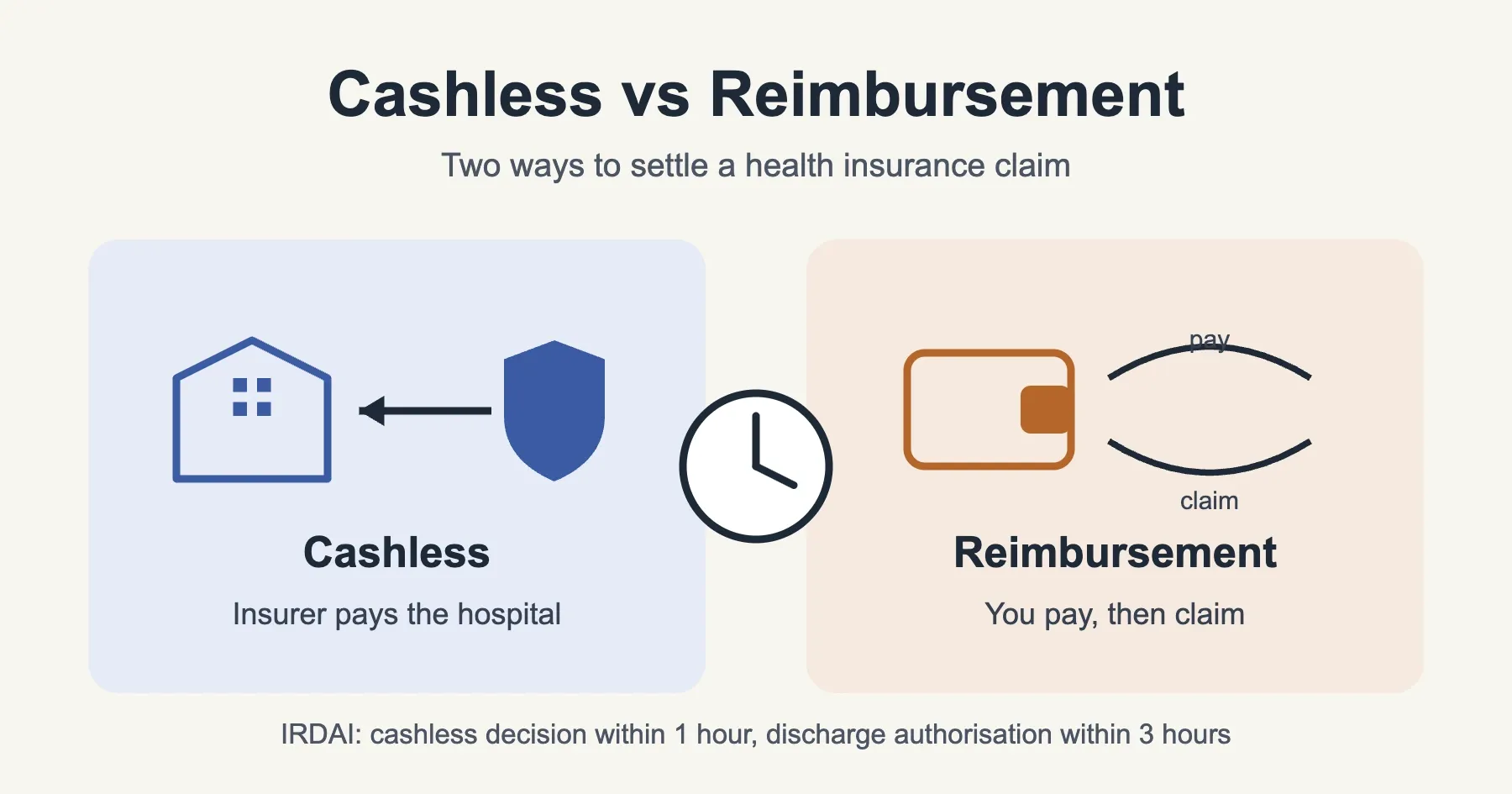
- IRDAI separates migration (same insurer) from portability (another insurer); both carry waiting-period credits. Ask about exit options before your last day.
- Your Customer Information Sheet puts sub-limits and other key terms in one place.
Employer health insurance is useful, but it is often not enough on its own. A group policy usually ends when you leave the job, may be shared with your family, and may not match hospital costs in your city. Before you rely on it, check five things: the sum insured, who shares it, what happens on a job change, waiting periods, and sub-limits.
Take Aman, 24, a hypothetical first-jobber who has just joined a firm in Ranchi. His offer letter says "medical cover: ₹3 lakh, family floater", and he files it away as sorted. It is a real benefit, but one tied to his job, on terms his employer negotiated. This checklist helps you read your own company cover calmly, gap by gap, without assuming you need to buy anything.
Is my employer's health insurance enough?
No single number makes a group policy "enough". It depends on your city, who shares the policy, how long you stay in the job, and the policy wording. Test your cover against five gaps:
- Size: is the sum insured enough for one hospital stay in your city?
- Family: is it shared with a spouse, children or parents?
- Job change: what happens on your last working day?
- Waiting periods: would a new personal policy make you wait?
- Sub-limits: are there caps on room rent or specific treatments?
If it passes all five, your group policy may be doing most of the work. If it fails one or two, you know where to look next.
Gap 1: Is the sum insured sized for one hospital stay in your city?
The sum insured is the most the policy pays in a policy year. Hospital costs vary widely by city, hospital and treatment, so we do not quote a "typical" bill. Here is how a gap appears.
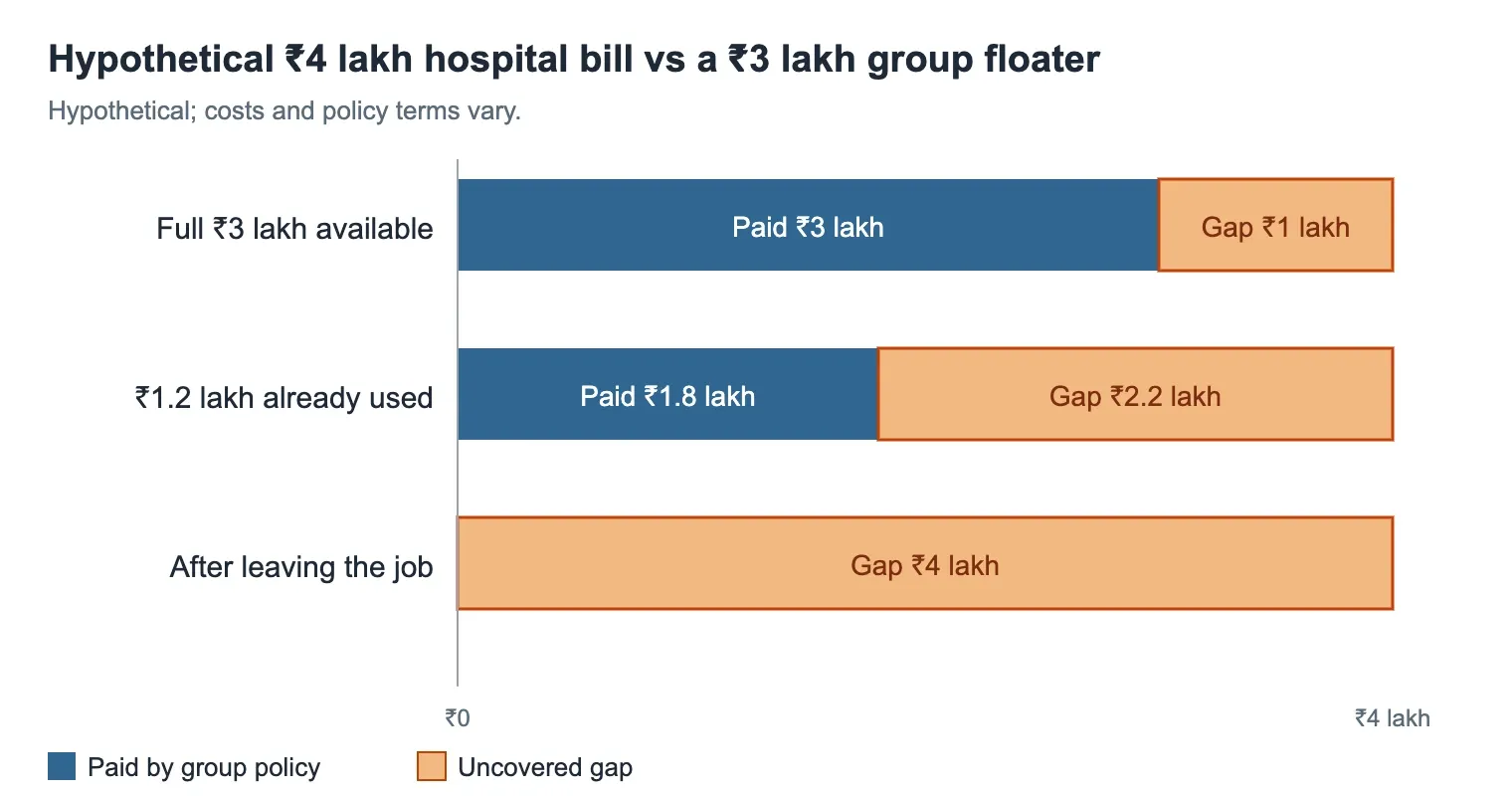
Hypothetical example (costs and policy terms vary)
- Employer cover: ₹3 lakh sum insured, family floater.
- One hospital stay: a bill of ₹4 lakh.
- The policy pays up to ₹3 lakh. The uncovered amount is ₹4 lakh − ₹3 lakh = ₹1 lakh, or 25% of the bill.
A practical step: ask a hospital near you what a common procedure costs, and compare that with your sum insured.
Gap 2: Who else shares it?
Many group policies are floaters: one sum insured covers you and listed family members together, so one person's claim reduces what is left for everyone that year.
Extend the example. Suppose a family member already used ₹1.2 lakh of the floater earlier in the year:
- Cover left: ₹3 lakh − ₹1.2 lakh = ₹1.8 lakh.
- The same ₹4 lakh bill now leaves ₹2.2 lakh uncovered, or 55% of the bill.
Parents are a separate check. Some employers include them, some offer an employee-paid add-on, some leave them out. Your policy schedule will say.
Read the sub-limits while you are there
Sub-limits, the fifth gap, sit in the same papers. IRDAI's Master Circular on Health Insurance Business (29 May 2024) requires insurers to give a Customer Information Sheet (CIS) with every policy, including to group members. The CIS lists sub-limits, which it describes as a pre-defined limit above which the insurer will not pay. Look for limits on room rent, specific procedures or co-payment: a bill inside the sum insured can still be paid only in part.
What happens to my corporate health cover when I leave or change jobs?
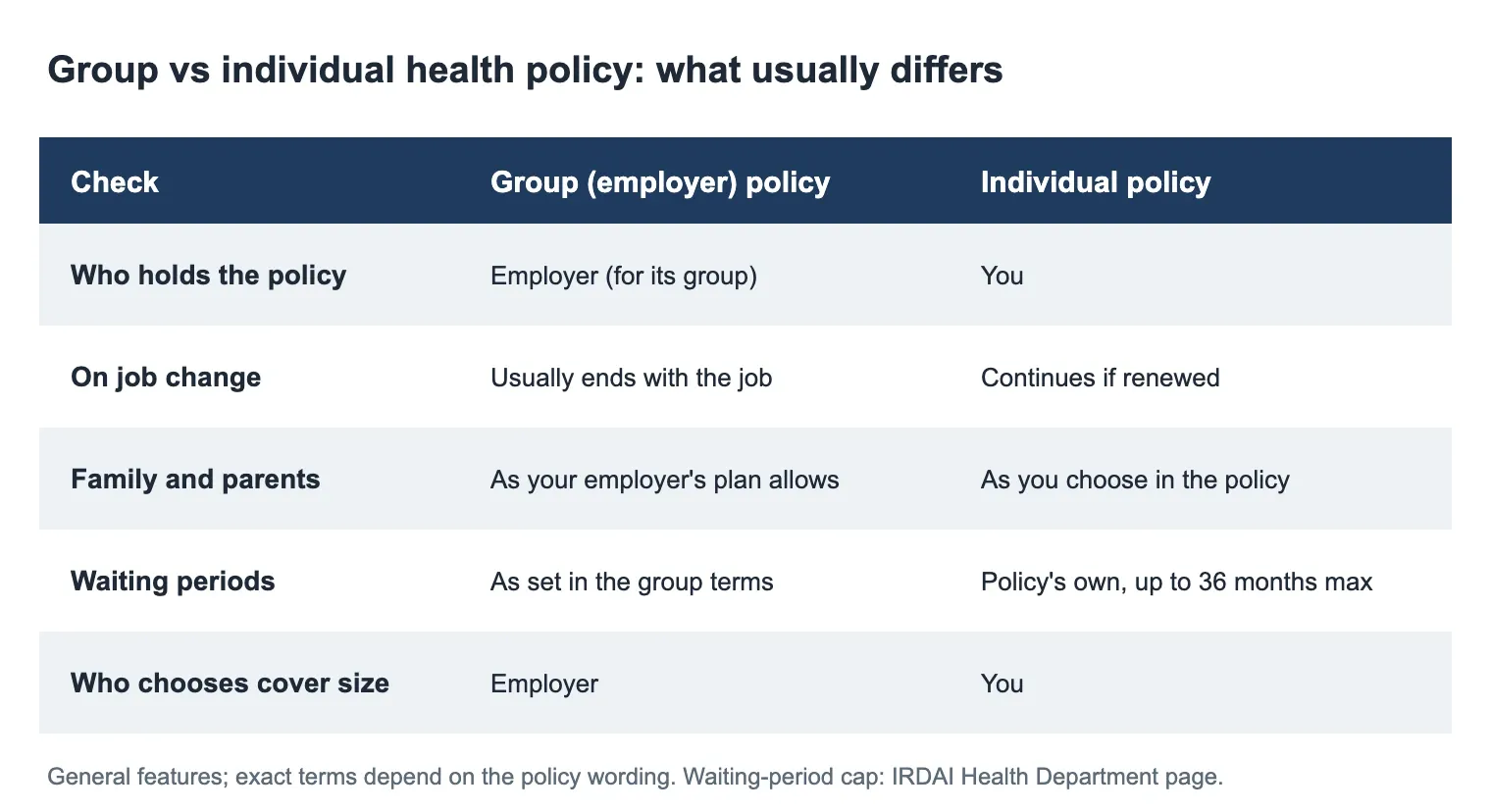
Your cover sits under a policy your employer holds for its staff. When you leave the group, your cover under it normally ends. Check your policy terms for the exact date, often linked to your last working day.
In the example, the uncovered amount for a ₹4 lakh bill after that date is the full ₹4 lakh, unless you have other cover in place.
This matters most between jobs, during a career break, or in freelance work. A new employer's cover may start later or have different terms.
Can I convert or port my group health policy to an individual policy?
IRDAI uses two different words here.
- Migration means moving to another policy with the same insurer. Under para 11 of IRDAI's Master Circular on Health Insurance Business (29 May 2024), the policyholder, "including all members under family cover and group insurance policies", can carry credits to the extent of the sum insured, no claim bonus, specific waiting periods and pre-existing disease waiting period.
- Portability means moving your policy from one insurer to another. IRDAI's Health Department page says portability is allowed for individual, family floater and group health insurance policies at the time of renewal, and that you should apply at least 30 days before, but not earlier than 60 days from, the renewal due date.
The circular does not set out a process or timeline for an employee leaving a group to move into an individual policy. So ask early, ideally before your last working day:
- Ask HR or the insurer's helpdesk whether the group policy offers migration to an individual or family policy.
- Ask what credit carries over, and up to what sum insured.
- Ask how many days you have to apply after leaving.
Do waiting periods restart if I buy a new personal health policy?
A fresh personal policy, bought without migration or portability, generally has its own waiting periods: an initial one, ones for specific diseases, and one for pre-existing diseases. IRDAI's Health Department page states that the maximum waiting period under a health insurance policy shall not be more than 36 months. The actual periods for any policy are in its wording.
Migration and portability exist to protect credit for time already served. Continuity matters for another reason too. IRDAI's Health Department page says that after sixty continuous months of coverage, including portability and migration, policies and claims cannot be contested by the insurer on grounds of non-disclosure or misrepresentation, except on grounds of established fraud. A gap in cover can affect how that clock counts, so check with the insurer.
Should I buy personal health insurance if my company already covers me?
That is your call, and it depends on which gap you found. Here is how the main options usually work:
- Personal base policy: fits if your main worry is the job-change gap, because the policy stays with you whoever your employer is. Check its waiting periods and sub-limits too.
- Top-up or super top-up: fits if your main worry is the size gap. These pay only after a set amount, called the deductible, has been crossed. A top-up generally looks at one claim at a time; a super top-up generally looks at total claims in the policy year. See how a super top-up deductible works.
- Group cover plus an emergency fund: fits if your group policy passes most checks and you want a buffer for co-payments and small gaps.
A top-up sits on top of other cover, so it does not fix the job-change gap by itself.
Frequently asked questions
What is a super top-up?
A super top-up pays once your total claims in a policy year cross a set deductible. A regular top-up generally applies the deductible to each claim. Definitions vary, so check what counts towards the deductible.
Where do I check my group policy terms?
Start with your HR portal for the policy schedule. IRDAI requires a Customer Information Sheet for every policy, including for group members, summarising cover, exclusions, waiting periods and sub-limits.
Does employer health insurance continue after I resign?
Normally not, once you leave the group; the end date is in your policy terms. Ask HR or the insurer whether migration to an individual policy is available and by when.
What is the difference between migration and portability?
Migration is moving to another policy with the same insurer; portability is moving to a different insurer, at renewal. Under IRDAI's rules, both carry credits, including waiting-period credit, to the extent of the sum insured.
Where do I complain about a health insurance claim?
Complain to your insurer first. IRDAI says insurers must acknowledge a complaint immediately and decide within 14 days, and the reply must give the Insurance Ombudsman's contact details. IRDAI also runs the Bima Bharosa grievance system.
Read next
Sorting protection before investing? Compare the factors that decide the order in term insurance before your first SIP. Also useful: the first job money checklist, how much emergency fund to keep and ULIP or mutual fund.
— Laabh