Term insurance before your first SIP? The factors that decide the order for you
No single right order: term cover matters most if someone depends on your income. Weigh dependants, debts, existing cover and emergency fund.
Summarize this article with AI





The short version
- There is no one-size order between term insurance and an SIP. It depends on who depends on you.
- Term insurance is pure protection; an SIP is investing.
- Four factors shape the order: dependants, debts, existing cover and your emergency fund.
- Size cover with a method based on your dependants and debts; in our hypothetical example it came to about ₹35.8 lakh.
- Many people plan for both; a qualified professional can help with the split.
There is no single right order between term insurance and your first SIP. Term cover matters most when someone depends on your income or would be left with your debts; if no one does, the case for buying cover today is weaker. Your emergency fund, any cover you already have and what you owe shape the order, and many people end up planning for both.
The question behind the search is usually personal: "I'm 25, I've just started earning, and I want to begin an SIP. Should I buy term insurance before starting an SIP?" The answer depends on facts only you know. This guide sets them out so you can decide the order yourself, with a professional if you need one.
The short answer depends on who depends on your income
Here are two common situations, described as general information rather than advice.
Situation A: no dependants, no shared debt. You are single, your parents are financially independent, and no one else would have to repay your loans. In this situation the case for term cover today is weaker. One thing people here still weigh: premiums are generally set by your age and health when you buy, so some choose to buy earlier. Many people in this position revisit it at marriage, a home loan, a child, or when parents start to rely on them.
Situation B: someone relies on you. Your parents, a spouse or children depend on part of your income, or you have co-signed a loan with a family member. Term cover is the category designed to replace that income if you die during the policy term, so the case for considering cover sooner is stronger.
Most readers sit between the two; the four factors below help you place yourself.
What term insurance is, and isn't
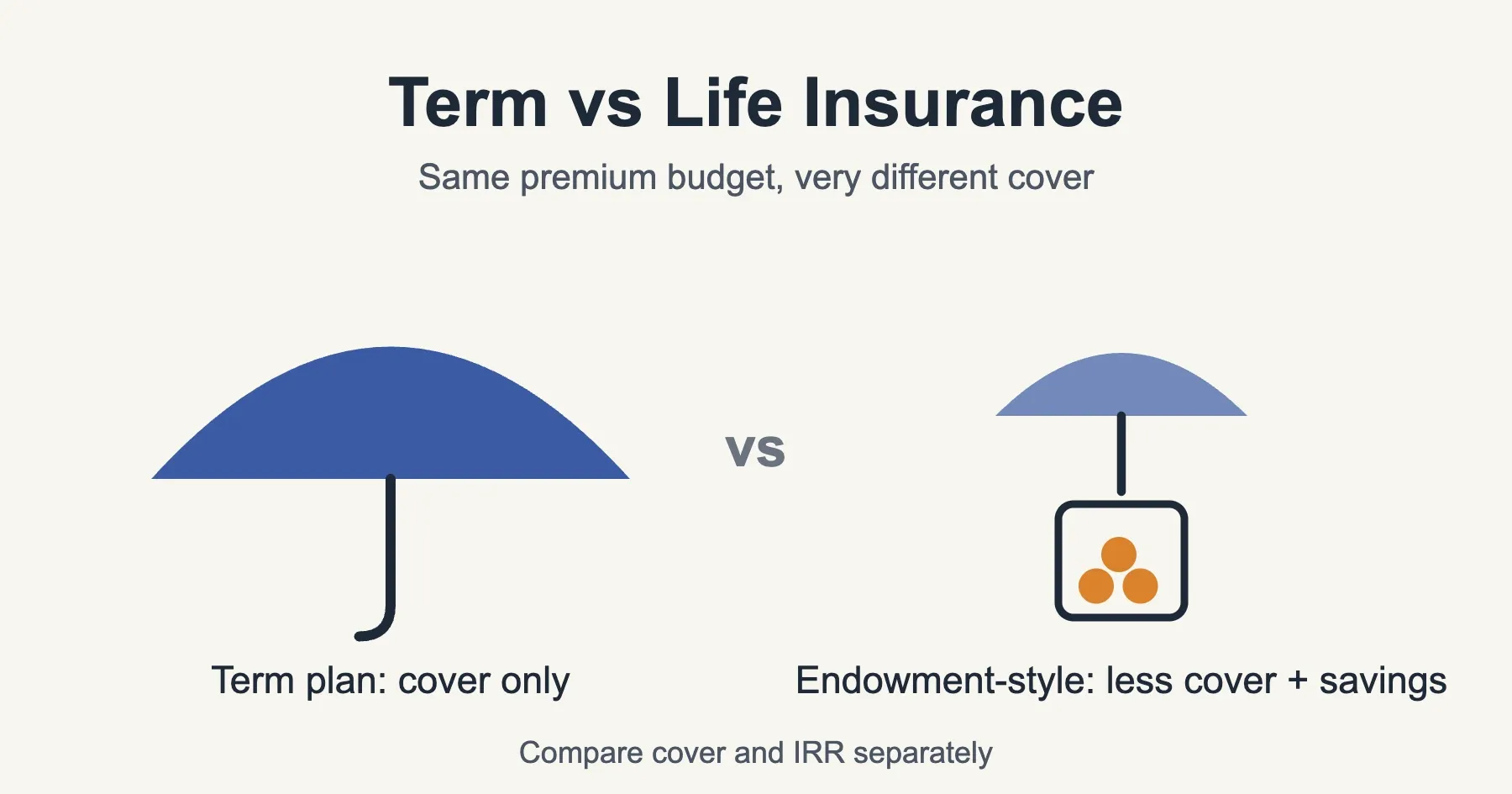
Term insurance is pure protection life cover. IRDAI, India's insurance regulator, describes it on its policyholder education site this way: "You can choose to have protection for a set period of time with Term Insurance." It adds: "In the event of death or Total and Permanent Disability (if the benefit is offered), your dependants will be paid a benefit."
The same page is clear about what happens if you outlive the policy: "In Term Insurance, no benefit is normally payable if the life assured survives the term." So a plain term plan is not a savings product: you pay for protection, and if you never claim, you normally get nothing back.
How ULIPs and endowment plans differ in purpose
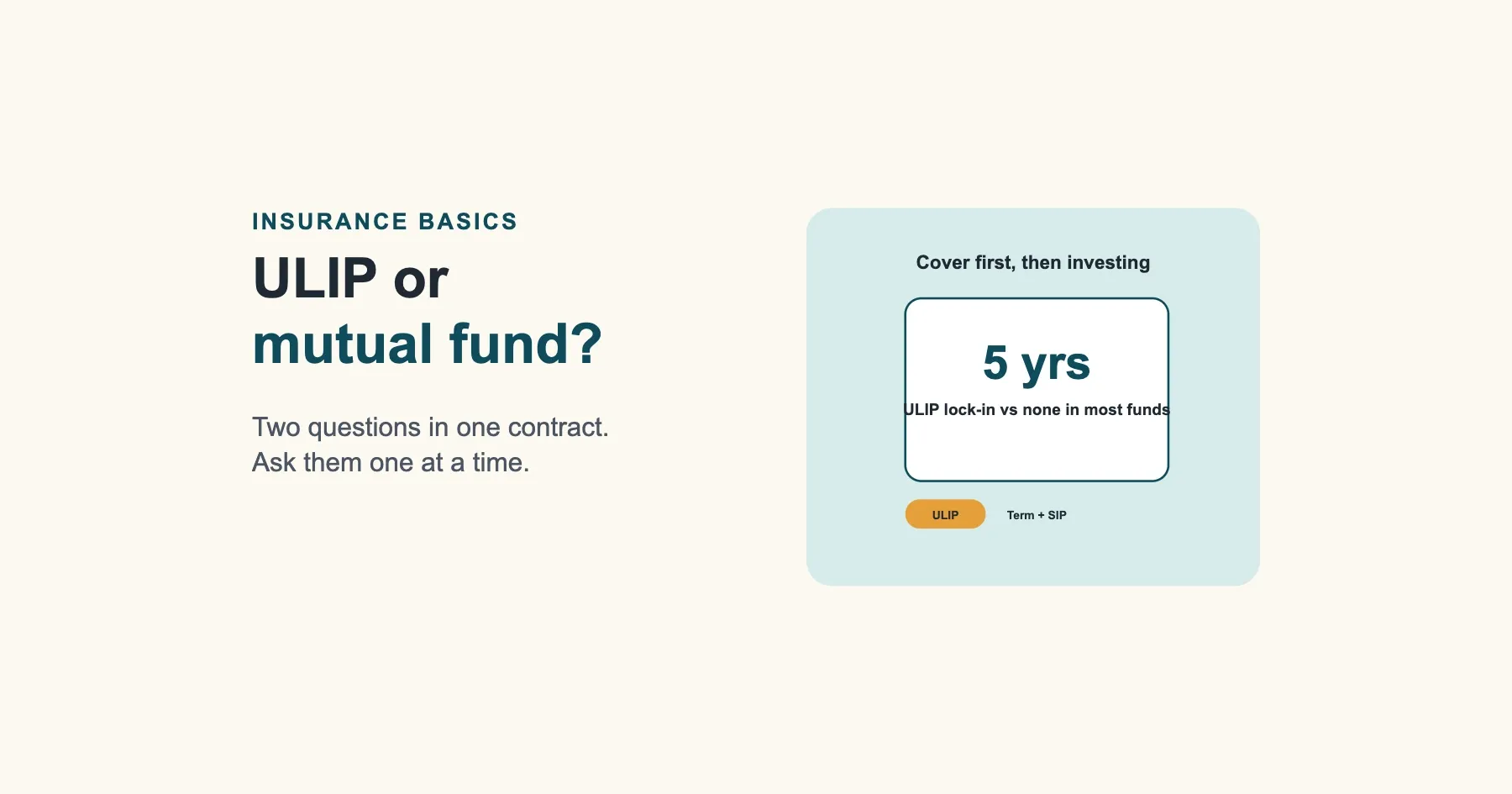
Some life insurance products combine protection with saving or investing. IRDAI's page describes an endowment policy as "a savings linked insurance policy with a specific maturity date", where "On your surviving the term, the maturity proceeds on the policy become payable." It says Unit Linked Insurance Policies (ULIPs) "offer a combination of investment and protection", and warns that in unit-linked plans the investment risk is borne by you as the investor. It also notes that "There are various charges applicable for Unit Linked Policies". For a side-by-side, see ULIP or mutual fund.
This guide does not judge these categories. The point is purpose: a combined product asks one purchase to do two jobs; term insurance does one.
Where an SIP fits
An SIP (systematic investment plan) invests a fixed amount in a mutual fund at regular intervals. It is investing, not protection: its value moves with the market, and it pays nothing extra if you die.
| Term insurance | SIP in a mutual fund | |
|---|---|---|
| What it is for | Protecting people who depend on your income | Building wealth over time |
| What you get | A payout to your nominee if you die within the term | Units in a mutual fund scheme, whose value can rise or fall |
| When it pays | Only on a claim during the policy term | When you redeem your units |
| If you stop paying | Cover can lapse; check your policy terms | Your existing units stay invested; new instalments stop |
Our summary of the two categories, not IRDAI's wording. What happens if you miss a premium depends on your policy terms.
Four factors that shape the order
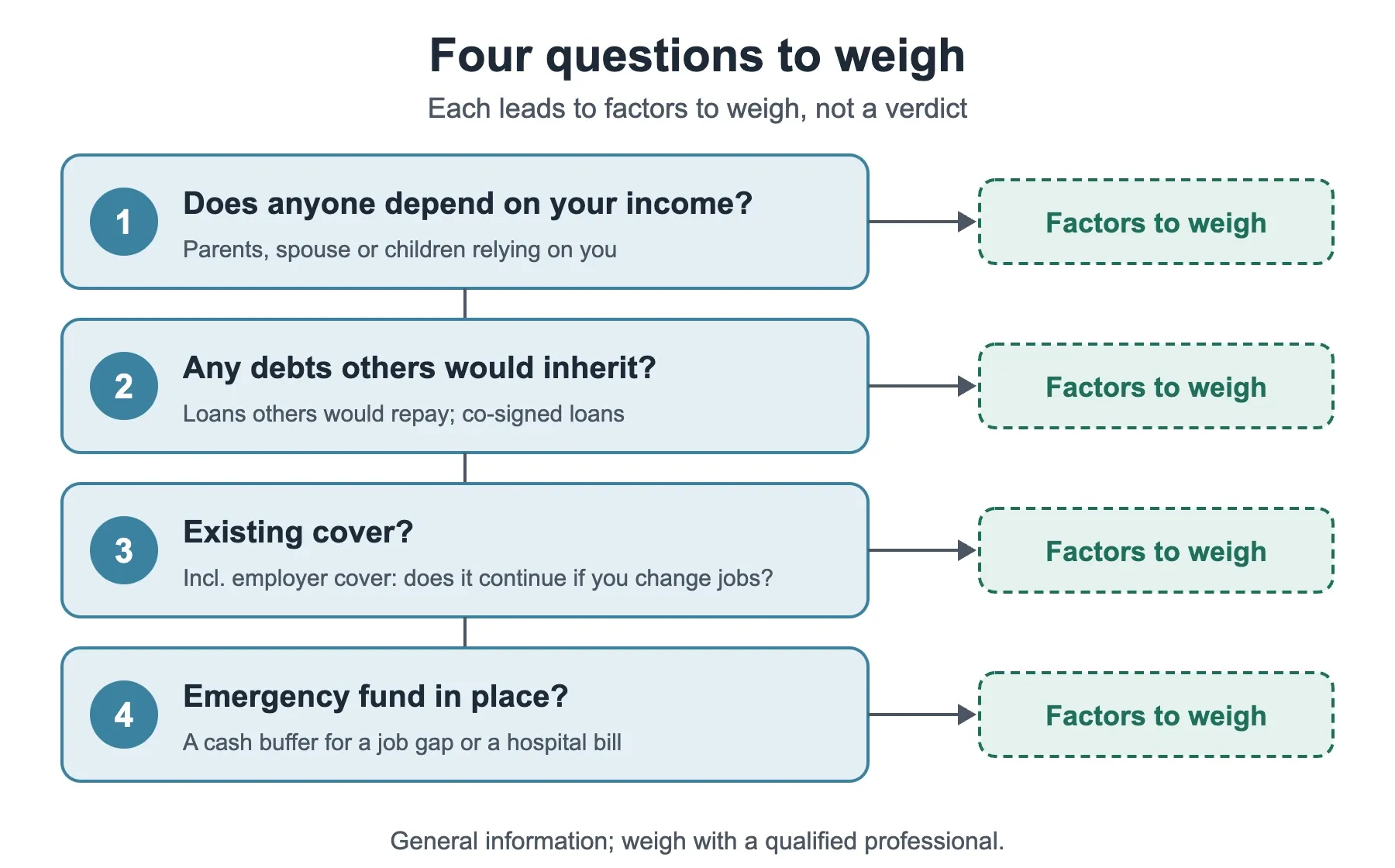
None of these four questions gives a verdict on its own.
- Dependants. Does anyone rely on your income today, or will they soon?
- Debts. Do you have loans that others would have to repay, or a loan you co-signed?
- Existing cover. Do you already have life cover, including group cover from your employer? Ask HR what happens to it if you change jobs.
- Emergency fund. Do you have a cash buffer for job loss or a medical bill? If not, see how much emergency fund you need.
| Factor | Points toward considering cover sooner | Points toward less urgency today |
|---|---|---|
| Dependants | Parents, spouse or children rely on your income | No one relies on your income |
| Debts | Loans others would have to repay; co-signed loans | No debt, or debt that would not pass to family |
| Existing cover | None, or only employer cover tied to the job | Adequate cover already in place |
| Emergency fund | In place: more of your cash is free to weigh cover | Not yet built: it competes for the same cash; weigh it alongside cover |
General information; weigh these factors with a qualified professional.
If no one depends on your income
The protection question is smaller for now, though not zero if debts would pass to family. Many people in this position revisit cover when life changes: a wedding, a home loan, a child, or parents who begin to rely on them.
If someone does
The question becomes how much cover would let them manage without your income, and how that fits alongside an emergency fund and an SIP. Employer cover can help, but check whether it continues if you change jobs.
Where your emergency fund and health cover fit
An emergency fund is money set aside for a job gap or a hospital bill. Without it, one bad month can force you to stop an SIP or miss a premium.
Health insurance is a separate factor: it pays medical costs while you are alive, while term cover pays your nominee if you die. Whether your employer's health cover is enough is a question to weigh on its own; see whether employer health insurance is enough. This guide does not set an order between them; the first job money checklist lists the other early decisions.
How much cover? A method, not a multiplier
Instead of a multiple of income, start from the people and debts the cover protects:
Dependants' yearly expenses × years of support + debts + big goals you want funded − existing savings and cover
This worked example is hypothetical and simplified, ignoring inflation and investment returns. It assumes a ₹35,000 monthly take-home, with family relying on part of it.
| Item | Illustrative figure |
|---|---|
| Dependants' yearly expenses (₹18,000 a month) | ₹2,16,000 |
| × years of support (15) | ₹32,40,000 |
| + outstanding loan | ₹4,00,000 |
| + big goals | ₹0 (none included here) |
| − existing savings | ₹60,000 |
| − existing personal cover | ₹0 |
| = indicative cover need (simplified) | ₹35,80,000 |
The arithmetic: ₹18,000 × 12 = ₹2,16,000; × 15 = ₹32,40,000; + ₹4,00,000 = ₹36,40,000; − ₹60,000 = ₹35,80,000.
Hypothetical and simplified: no inflation, no investment returns, no employer cover counted. Your figure will differ.
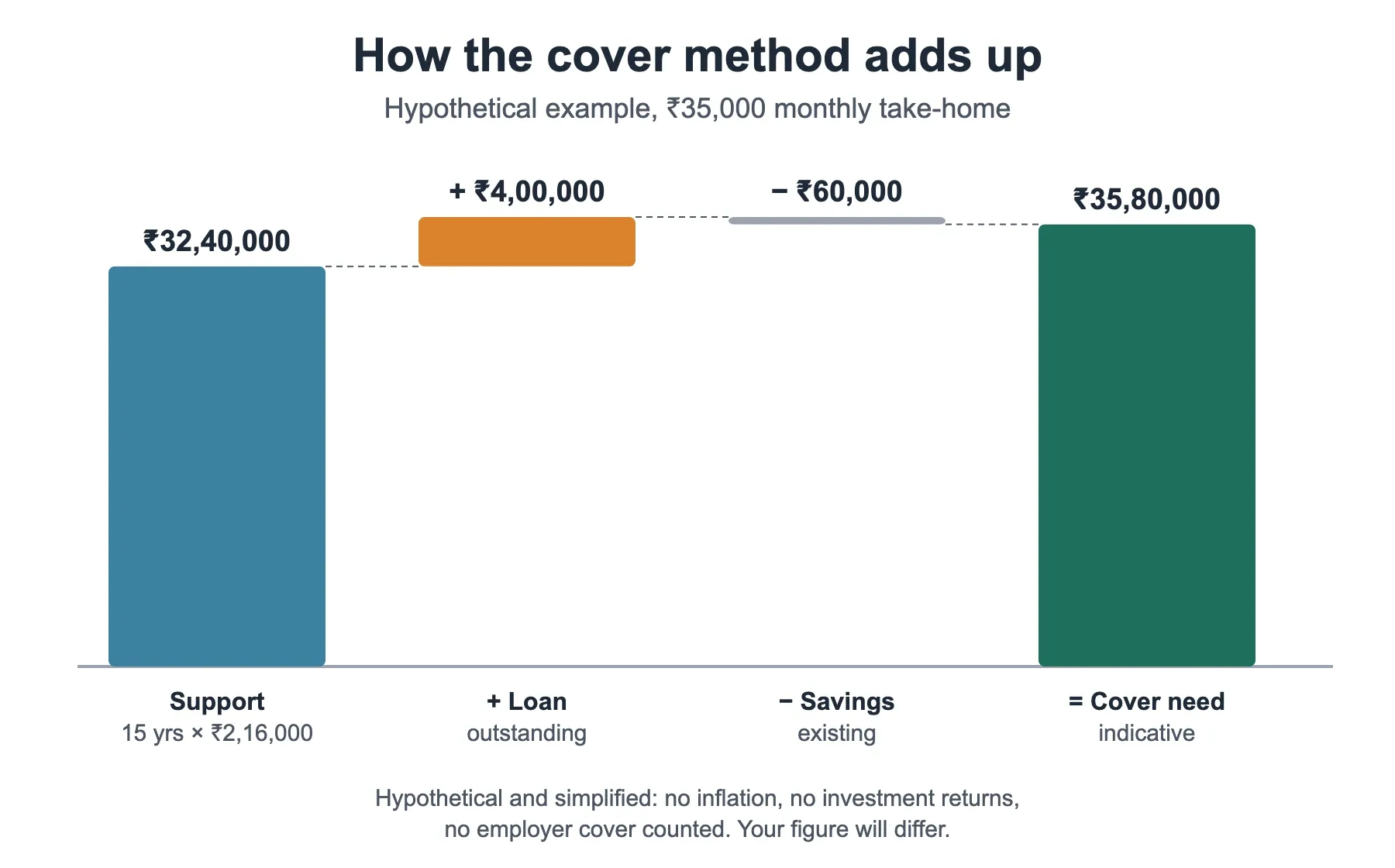
Each input is a judgement. Fifteen years is only this example's assumption; young children might need longer. Inflation would push the real figure up, and employer cover was left out because it may not travel with you. A qualified insurance or financial professional can test these assumptions. Our fuller guide on how much term cover you need works through each line.
Doing both on one salary
On a ₹35,000 take-home, it helps to list every claim on the money before deciding any split:
- rent, food, transport and daily spending
- the EMI on the ₹4,00,000 loan in our example
- money sent to family who rely on you
- building or topping up an emergency fund
- a health cover premium, if you buy your own
- a term cover premium, if you decide you need one
- a monthly SIP, if you decide to start one
For some, an SIP and a term premium fit side by side from the first salary; for others, one surprise bill would undo both. The split is your decision; a qualified adviser can help. For the SIP side, see how much SIP to start with your first salary.
Questions to ask yourself before deciding
- Who would lose income if I were not here, and for how many years?
- What do I owe, and would anyone else have to repay it?
- What life cover do I already have, and does it end if I change jobs?
- Could I cover three bad months without stopping an SIP or missing a premium?
- Is my health cover enough for a hospital stay?
- What life changes in the next few years would change these answers?
Frequently asked questions
Should I buy term insurance before I start my first SIP?
There is no single right order. Term cover matters most if someone depends on your income or would inherit your debts; if no one does, the case is weaker today. Your emergency fund and existing cover also shape the order.
I'm 25, single, with no dependants. Do I need term insurance before investing?
If no one relies on your income or would repay your debts, the case for term cover today is weaker. Many people revisit it at marriage, a home loan or a child.
In what order should I think about an emergency fund, health insurance, term insurance and an SIP?
There is no fixed order; it depends on your circumstances. An emergency fund absorbs a bad month, health cover pays medical costs, term cover protects dependants and an SIP builds wealth. Weigh each against your dependants, debts and existing cover.
How much term insurance cover do I need?
One method: dependants' yearly expenses × years of support, plus debts and big goals, minus existing savings and cover. In our hypothetical, simplified example, it came to ₹35,80,000. Your figure will differ, and inflation would raise it.
Is term insurance an investment, and how is a ULIP or endowment plan different?
A plain term plan is protection, not an investment; IRDAI says no benefit is normally payable if you survive the term. Endowment plans and ULIPs combine insurance with saving or investing, and IRDAI notes that in unit-linked plans the investment risk is borne by you.
My employer gives group life cover. Do I still need my own term plan?
It depends on how much cover it gives compared with what your dependants would need. Employer cover can help, but check whether it continues if you change jobs; HR can tell you how your group cover works.
Your next step
List who depends on your income and what you owe. That list tells you how urgent cover is for you. If unsure, talk to a qualified insurance or financial professional.
— Laabh