PPF interest calculation: why the 5th of the month decides a month's interest
PPF interest uses the lowest balance between the 5th and month end, credited on 31 March. See the rule, the 7.1% rate and a ₹96,000 worked example.
Summarize this article with AI





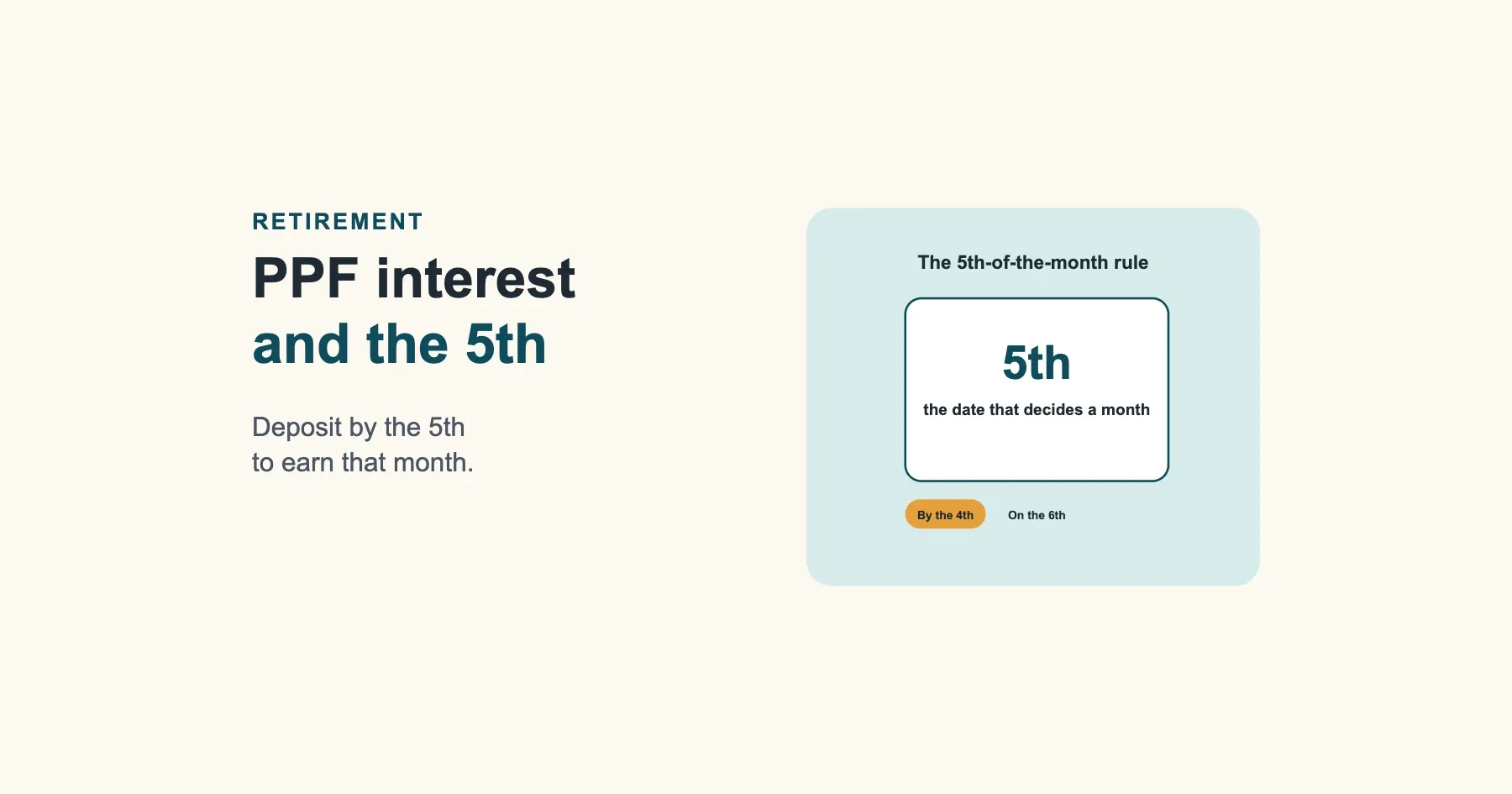
The short version
- PPF interest is calculated monthly on the lowest balance between the close of the 5th and the month end, and credited on 31 March.
- Money that reaches the account after the 5th earns nothing for that month and starts earning from the next one.
- In the hypothetical ₹96,000 example at 7.1%, a 6 April deposit earns ₹568 less than a 4 April deposit over the year.
- The rate for October to December 2026 is 7.1% a year, and rates are reviewed every quarter.
PPF interest is calculated each month on the lowest balance in your account between the close of the 5th and the month end, and credited once, at the end of the financial year. Money that reaches the account after the 5th earns nothing for that month. The rate for October to December 2026 is 7.1% a year.
Take Harsh, 31, a salaried engineer in Agra. He puts ₹96,000 into his PPF account each April. The money could arrive on 4 April or on 6 April: two days apart, but in PPF terms, different months. Here is the rule and the arithmetic.
How is PPF interest calculated: monthly or yearly?
Both, in a sense. Interest is worked out monthly and credited yearly. The Public Provident Fund Scheme, 2019 (notified by the Ministry of Finance as G.S.R. 915(E) on 12 December 2019) says in paragraph 7:
The 2019 text names 7.9%, the rate then. The government now notifies the rate each quarter, so each month uses that quarter's rate.
In plain steps:
- For each month, look at your balance from the close of the 5th to the month end.
- Take the lowest figure in that window.
- Interest for the month = lowest balance × annual rate ÷ 12.
- Add up the 12 monthly figures at the end of the financial year (31 March) and credit the total to the account.
Because the yearly credit becomes part of the balance, next year's interest is calculated on it too. That is why PPF is described as compounding once a year.
Why do people say deposit in PPF before the 5th of the month?
Because of the word "lowest". If money arrives on or before the 5th, it is already in the balance when the window opens, so the lowest balance for that month includes it. If it arrives on the 6th or later, the balance between the close of the 5th and the deposit date is still the old, smaller figure. That smaller figure becomes the month's lowest balance.
A deposit after the 5th misses that month's interest. It is not lost forever; it starts earning from the next month. But that one month of interest on the new money does not come back.
How much interest do I lose if I deposit on the 6th instead of the 4th?
Here is Harsh's ₹96,000, worked through. This is a hypothetical example: it assumes the rate stays at 7.1% a year for all 12 months, which is not certain because rates are reset every quarter. It is not a promise; returns vary.
- Interest for one month on ₹96,000 = ₹96,000 × 7.1% ÷ 12 = ₹568
- Deposited on 4 April: the lowest balance includes ₹96,000 in all 12 months, April to March. Interest = 12 × ₹568 = ₹6,816
- Deposited on 6 April: April's lowest balance (close of the 5th to 30 April) is ₹0, so April earns nothing. May to March is 11 months. Interest = 11 × ₹568 = ₹6,248
- Difference: ₹568, exactly one month's interest.
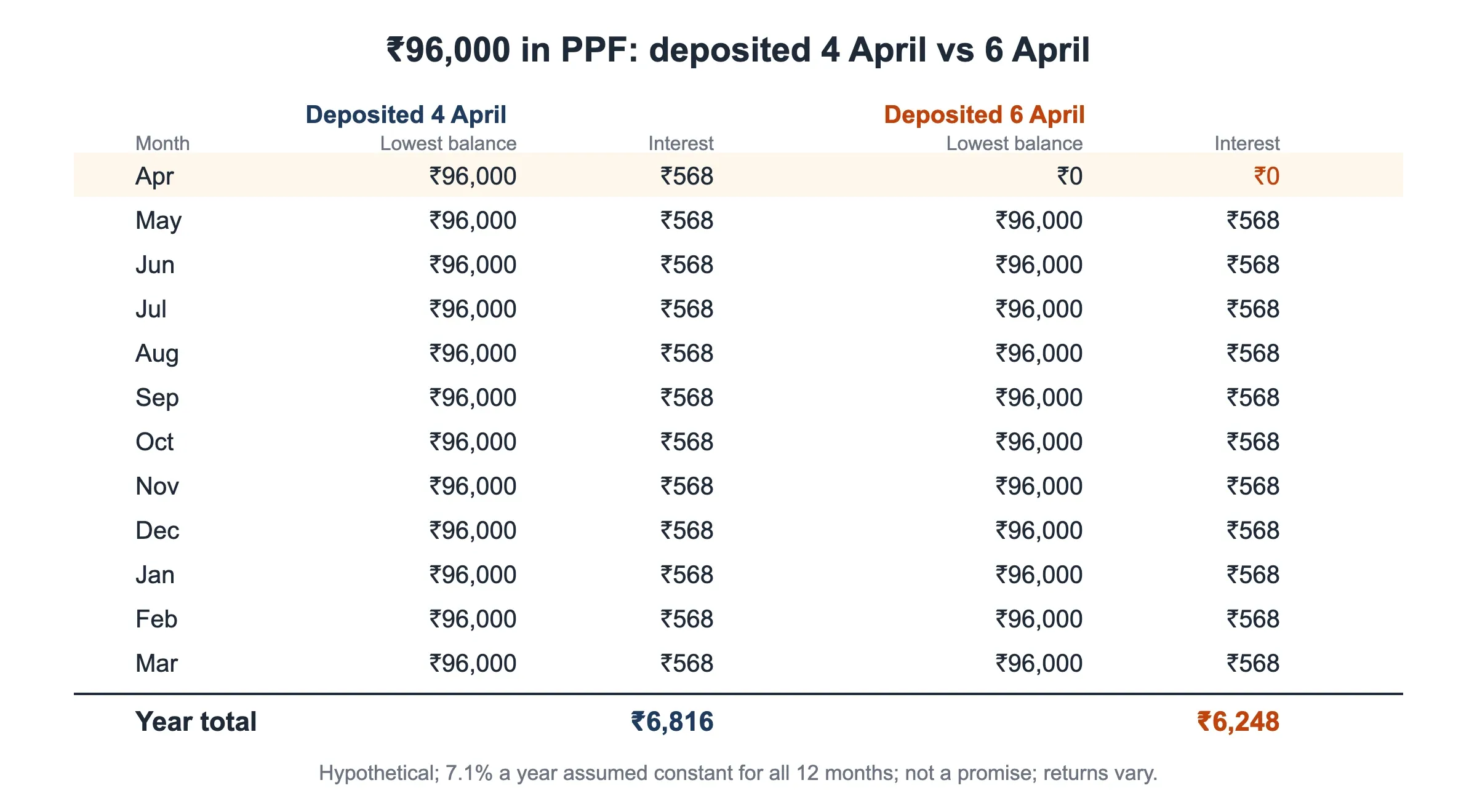
A late deposit costs one month's interest on the amount deposited.
What if I deposit every month instead?
Say Harsh splits the ₹96,000 into ₹8,000 a month, April to March, from an empty account, at the same hypothetical 7.1%:
- By the 4th each month: each instalment counts in its own month. Interest for the year ≈ ₹3,692
- On the 6th each month: each instalment waits a month. Interest for the year ≈ ₹3,124
- Difference: ₹568 a year
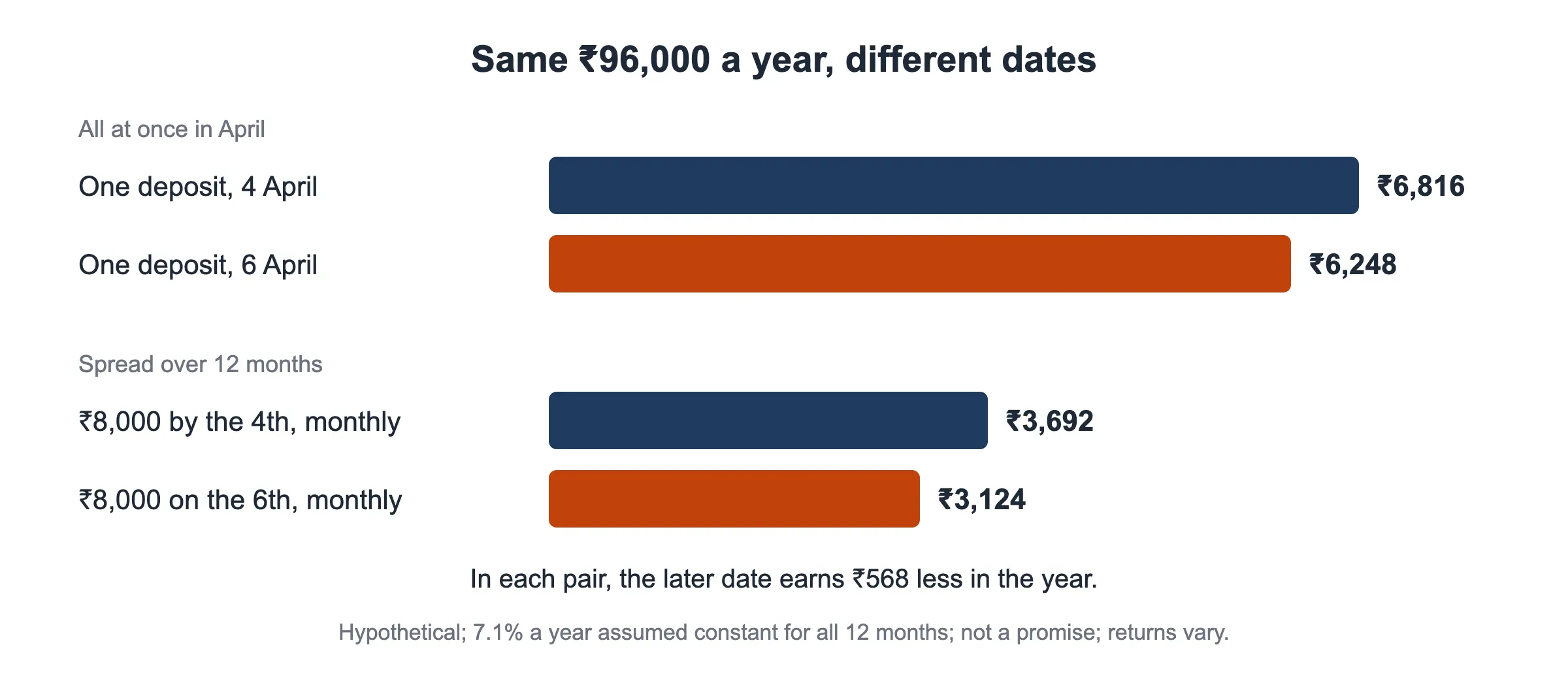
Monthly deposits earn less than one April deposit because the money goes in gradually. Being late every month still costs ₹568, because each ₹8,000 loses one month. Figures are rounded to the nearest rupee.
When is PPF interest actually credited to my account?
At the end of each financial year, on 31 March. A mid-year statement may show no interest yet, even though it is being calculated month by month. The credited amount then joins the balance and earns interest from April onwards.
What is the current PPF interest rate for October–December 2026?
7.1% a year, for 1 October to 31 December 2026. The Department of Economic Affairs (Ministry of Finance) issued an office memorandum dated 30 September 2026 keeping small savings rates for this quarter unchanged from July to September 2026.
The rate is reviewed every quarter and applies to your whole balance for that quarter's months. It is not locked in on the day you deposit.
Habits that keep the 5th working for you
- Count the credit date, not the transfer date. A transfer started late on the 5th, or near a holiday, may be credited after it.
- Leave a buffer. If salary lands on the 1st, depositing on the 2nd or 3rd leaves room for delays.
- A late deposit still counts for the year. Deposits of ₹500 to ₹1,50,000 are allowed each financial year; one made after 5 April counts towards that year's limit and only misses April's interest.
Frequently asked questions
Is a lump sum by 5 April better than monthly deposits?
For interest alone, yes, because money in by 5 April earns for all 12 months. In the hypothetical example above, ₹96,000 on 4 April earns ₹6,816 against ₹3,692 for ₹8,000 by the 4th of each month. Many people deposit monthly anyway because it matches their cash flow.
Does the 5th-of-the-month rule apply to online deposits?
Yes. The rule is about the balance in your PPF account, so what counts is when the money is credited, not when you press "pay". Transfers can take longer around weekends and holidays.
Is PPF interest taxable?
As of 17 November 2026, PPF interest and the maturity amount are treated as exempt from income tax. Under the old tax regime, deposits have qualified for a deduction within the ₹1.5 lakh limit for such savings. Whether you can use that deduction depends on the regime you choose under the Income-tax Act, 2025. Tax rules change; consult a tax professional for your situation.
What is the yearly deposit limit in PPF?
The PPF Scheme, 2019 allows a minimum of ₹500 and a maximum of ₹1,50,000 in a financial year, in multiples of ₹50.
PPF or SIP: which should I choose?
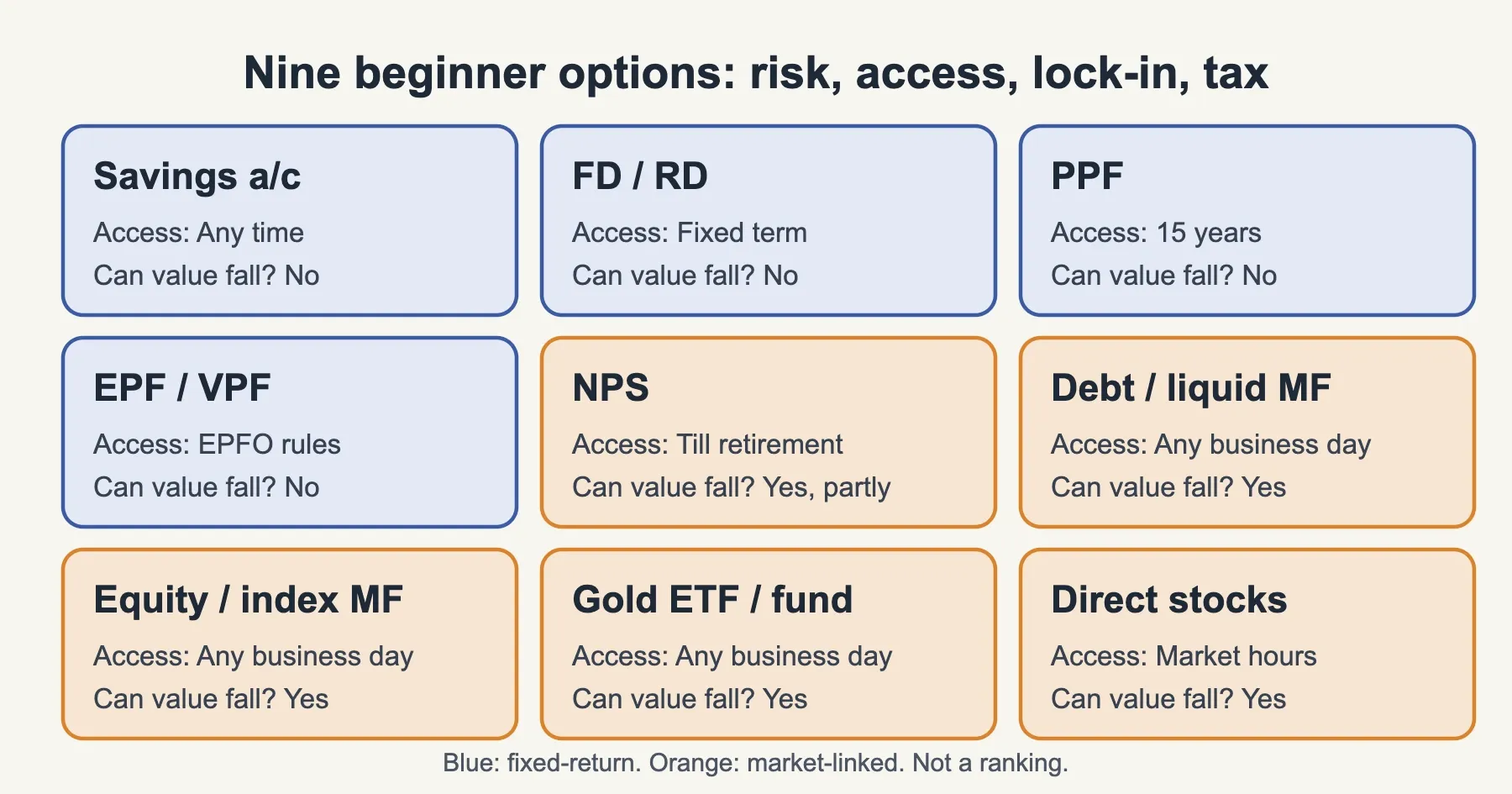
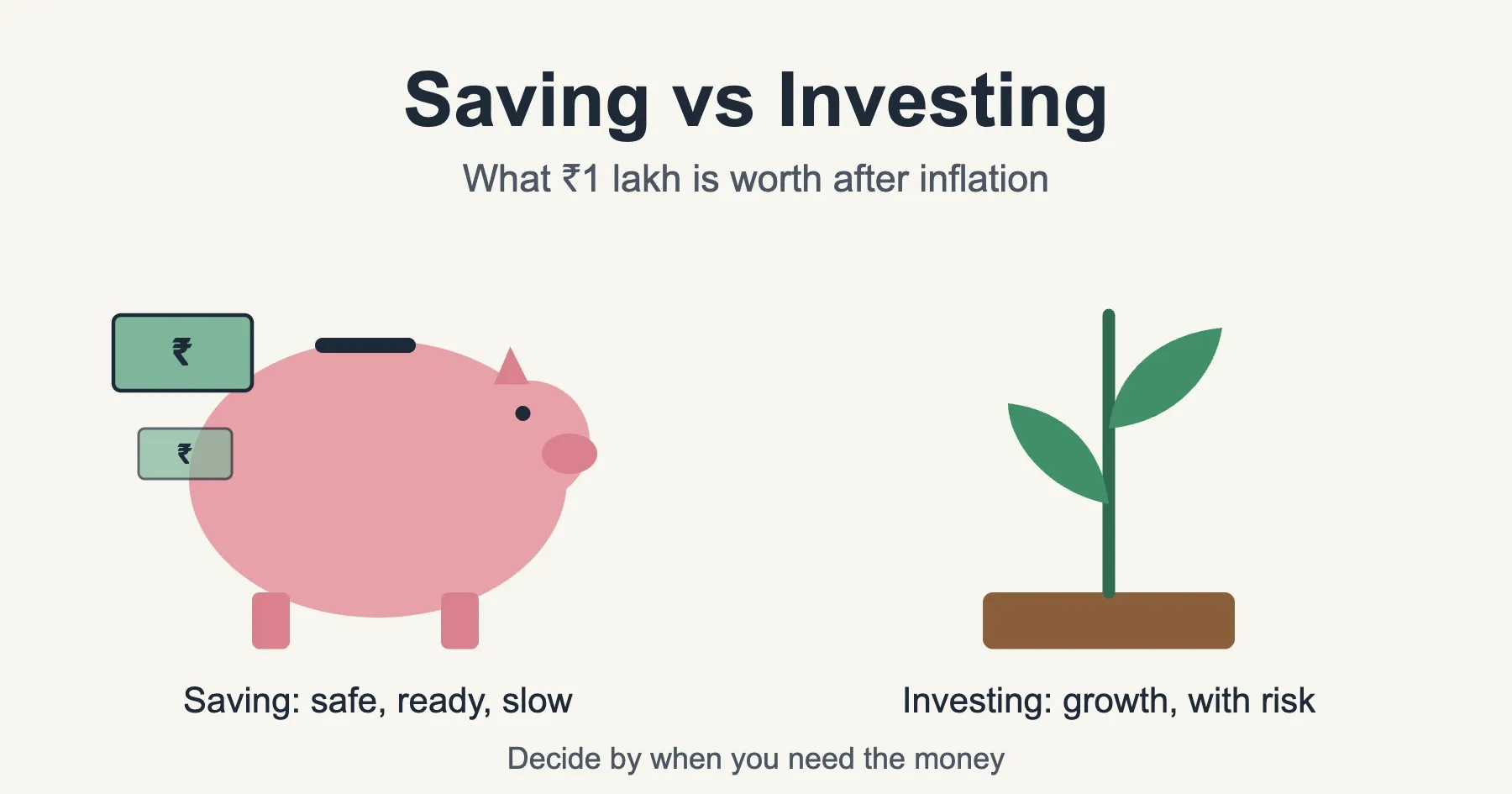
They do different jobs. PPF earns a government-set rate, reviewed each quarter, with a long lock-in. An SIP invests in a mutual fund whose value moves with markets. The useful question is what each rupee is for; see PPF vs SIP.
Read next
Before choosing between PPF and an SIP, read PPF vs SIP. Saving for retirement? Compare NPS vs SIP for retirement and NPS withdrawal rules in 2026.
— Laabh